University of Exeter|GEO & SEO Search Strategy in the China Market
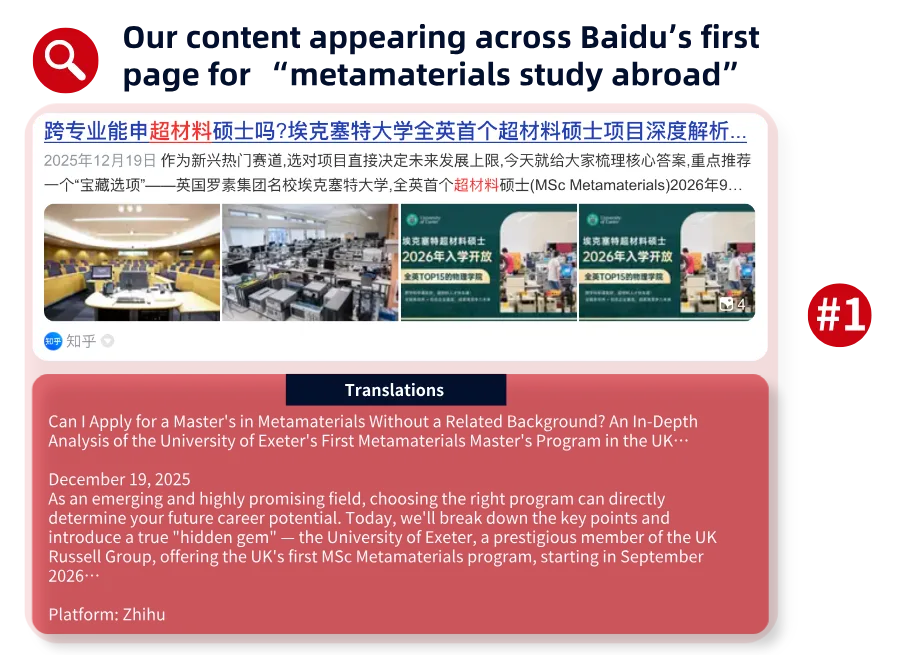
The University of Exeter is a member of the UK’s Russell Group.
Nanjing Marketing Group supported its 2026 MSc Metamaterials program—a highly specialized STEM subject—with a Chinese generative engine optimization (GEO) campaign.
Metamaterials is a niche subject that prospective students may research through search engines and AI tools, so we wanted the program to appear in those results.
What Did We Do?
We developed a China-focused content strategy for the University of Exeter’s MSc Metamaterials program, targeting both broad metamaterials searches and program-specific keywords.
We then created and published three optimized Chinese-language articles tailored to different stages of the student research journey. This was done with limited source materials from their website and from emails with our contact at the university.
To maximize visibility, we distributed the content across Sohu, Baijiahao, and Zhihu, adapting headlines and structure for each platform while optimizing for Baidu and AI search results.
The articles used search-friendly structures, naturally integrated keywords, and clear language to improve indexing and user engagement.
What Does This Campaign Teach Us About GEO and SEO in China?
Niche Overseas Programs Lack High-Quality Chinese Content
In China’s search ecosystem, highly specialized overseas programs are often discussed very little, even when students are actively searching for related topics.
This creates opportunities for universities to build visibility early by publishing clear, search-focused Chinese-language content before the space becomes more competitive.
Platform Differentiation Improves AI/GEO and SEO Visibility
Placing content on multiple platforms helps get it cited in AI tools. Tailoring headlines and structure—while maintaining consistent messaging—helps improve indexing and expand reach across platforms.
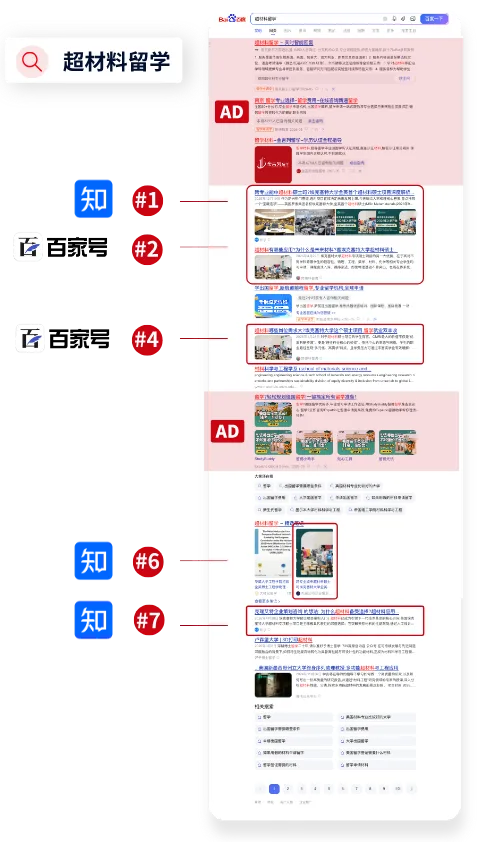
For instance, the Sohu article was cited by Baidu AI on the day of publication, while the Baijiahao piece ranked #1 organically for the keyword “MSc Metamaterials” on Baidu’s search results page within one week. This is much faster than website-focused SEO.
 Using Our Existing Accounts Helps Content Become More Visible to Search Engines
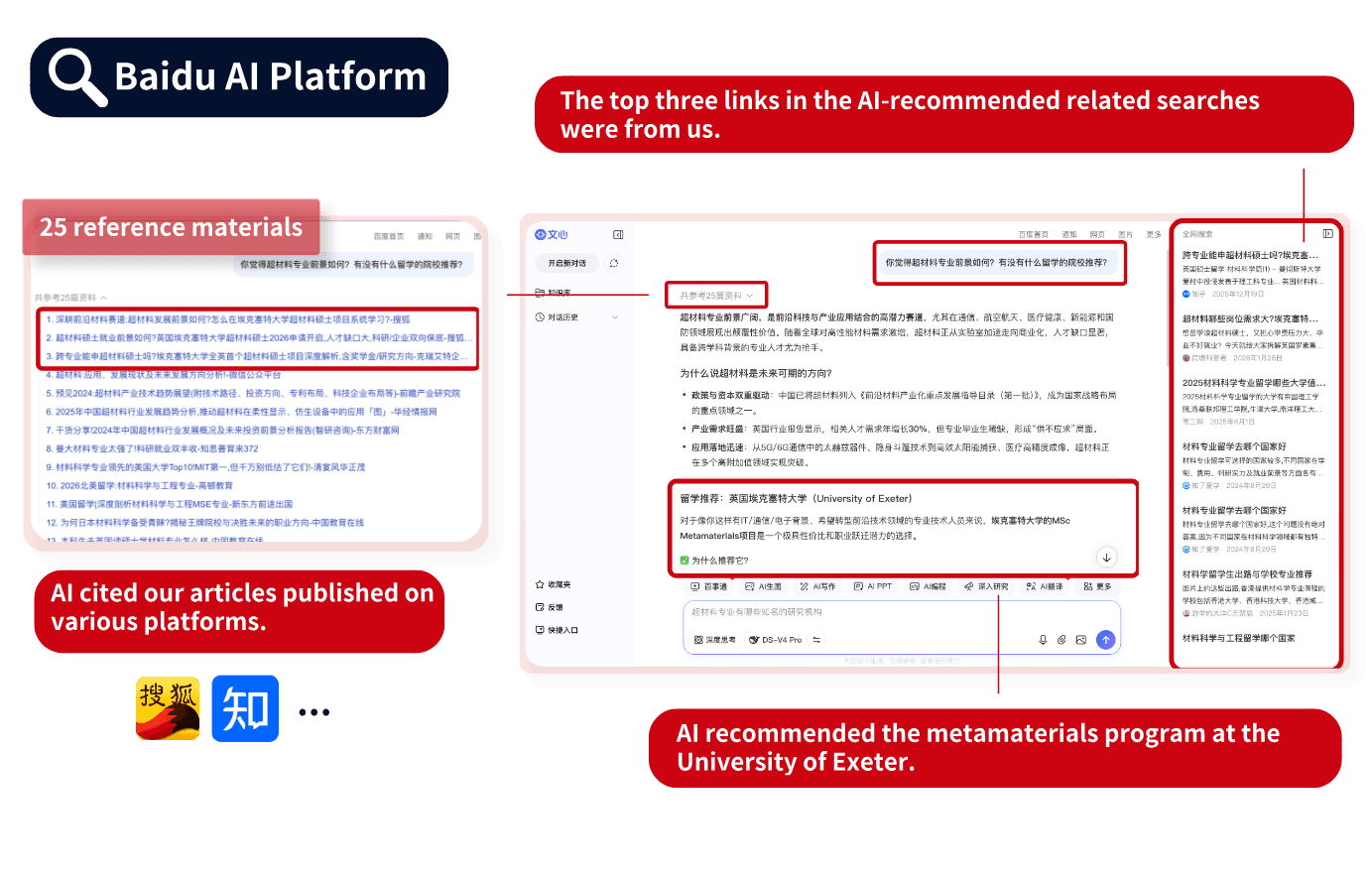
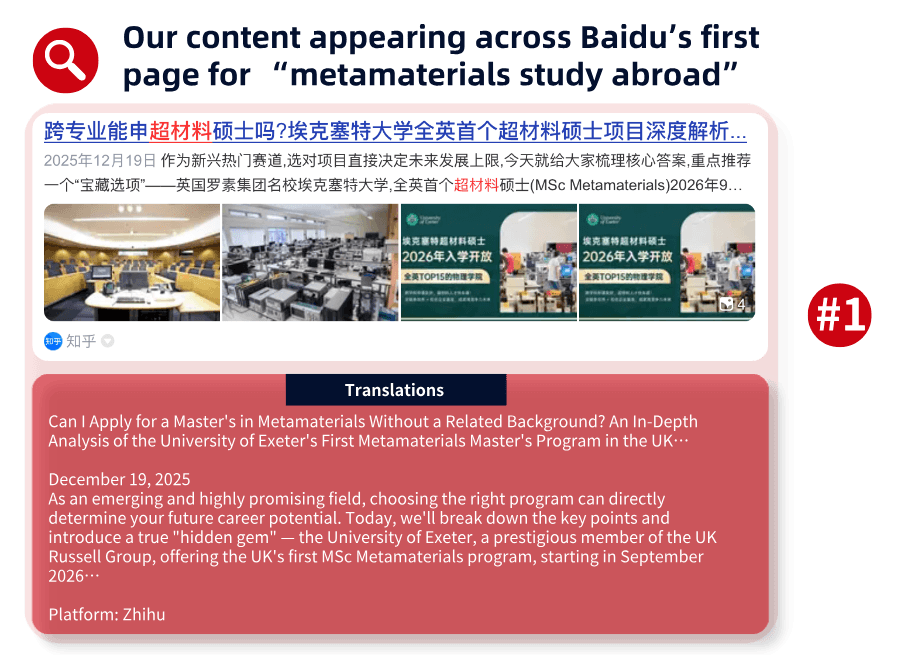
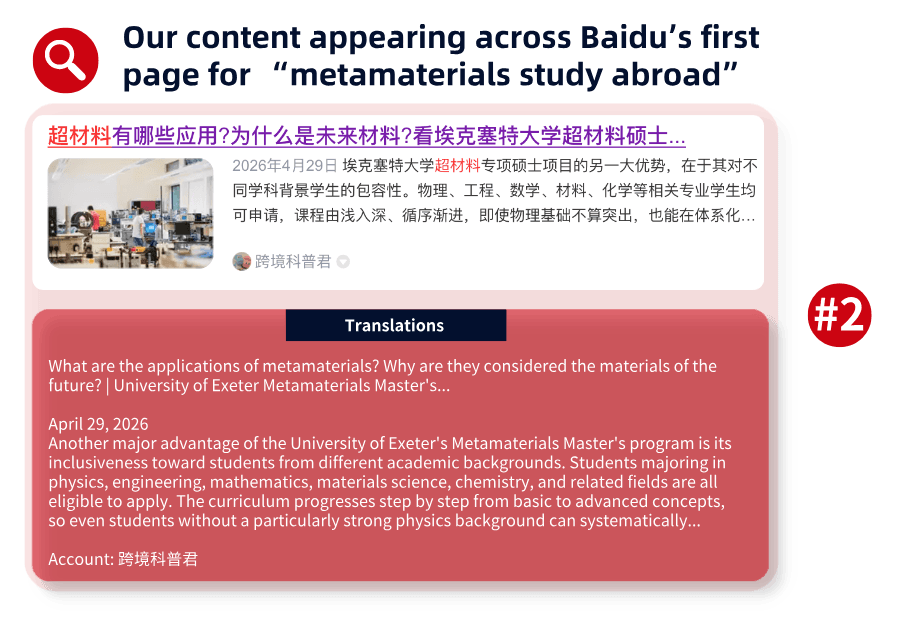
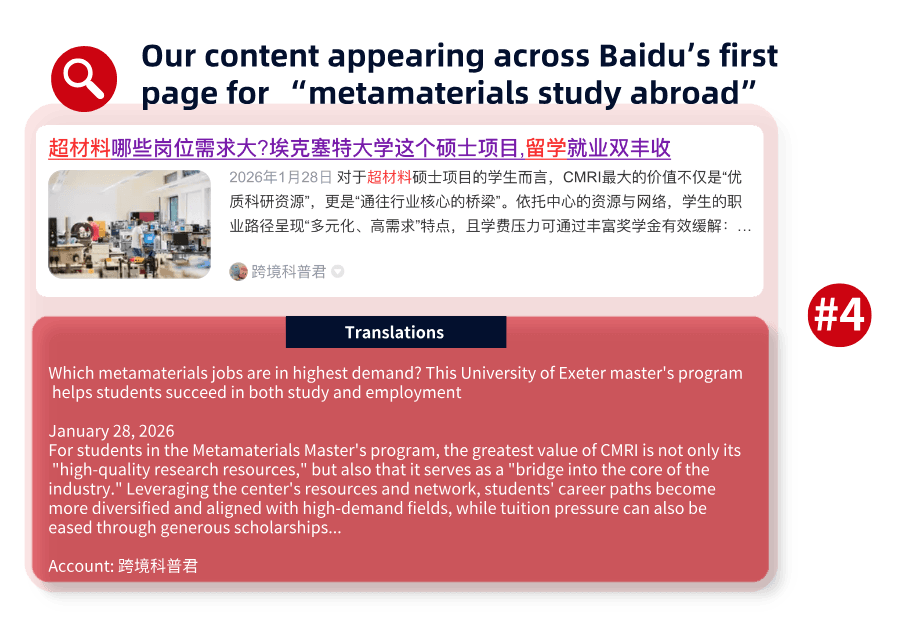
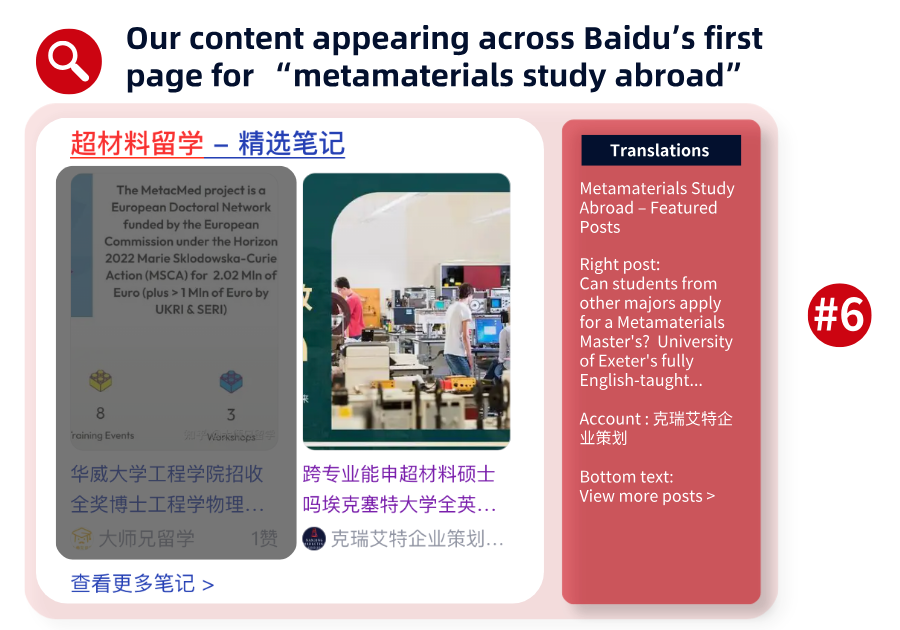
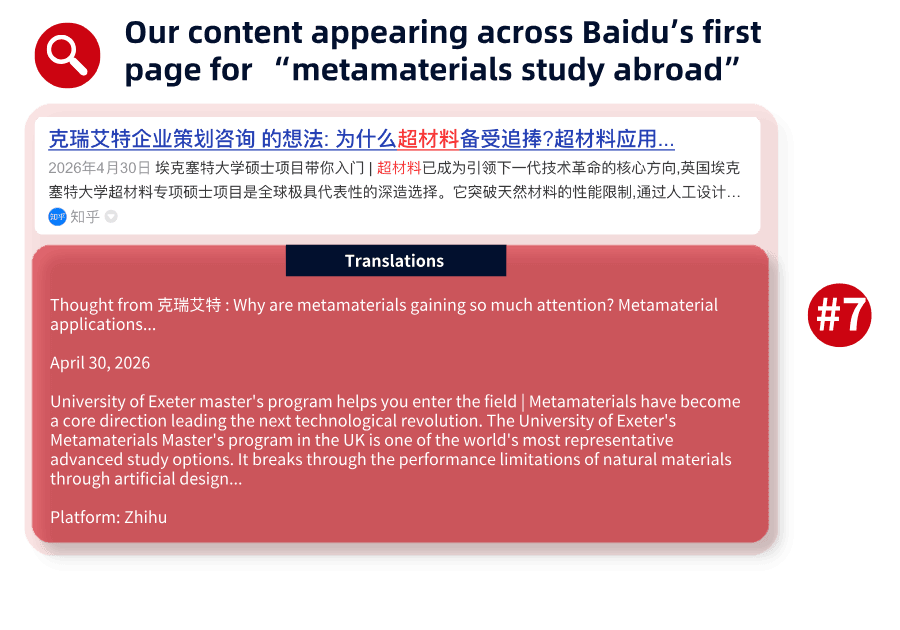
Rather than using only brand accounts belonging to the University of Exeter, we also used our own, which have a history of publishing high-quality content that ranks quickly in Baidu AI results.
Educational Content Should Reach Users at Multiple Stages in Their Research
The MSc Metamaterials program is new and unfamiliar to prospective students. We therefore needed to explain the program while also reaching people interested in learning about metamaterials.
We published three original articles for readers at different stages of their research:
- For early awareness-stage users new to the field, we introduced the basics and industry prospects with an article explaining what metamaterials are and why they are regarded as advanced materials of the future.
- For evaluation-stage users comparing university strengths, we showcased Exeter’s CMRI research advantages, industry-academia integration, and real-world research capabilities.
- For decision-stage users ready to apply, we covered 2026 intake entry details, cross-major eligibility, and high-profile industry cooperation opportunities.
This staged content strategy allows us to attract readers who are just starting to learn about metamaterials, while also converting interested candidates into prospective applicants for the University of Exeter’s new master’s program.

Short Videos

Landing Pages

WeChat Ads

WeChat Articles

Bilibili Ads
Baidu Ads
Rednote Ads
Contact Us for a Free Consultation
We’ll identify the potential obstacles hindering your expansion in China, and we’ll recommend the best course of action based on your individual needs.
If you think we’re a good fit, you’ll receive a proposal for services within a week.