
The education industry may be the most important business sector in China’s relationship with the rest of the world.
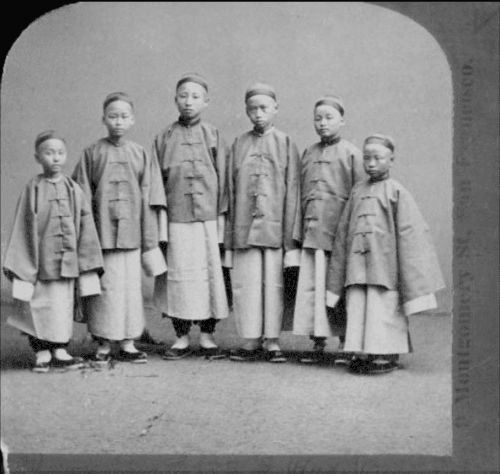
As far back as 1872, education programs have played a key role in creating relationships related to wider business networks and cross-cultural ties between China and the West. Today, many students’ first encounters with another country or culture come via international study.
I say this because it was my own experience.
After graduating from the London School of Economics with an MSc in China in Comparative Perspective, I moved to China to teach English and consult Chinese families who wished to send their children abroad. This experience helped me understand the country I had studied and the aspirations of people there.
Since that time as a teacher, I have continued teaching in my spare time while working in other industries like journalism, gaming, translation, tech, and marketing. I believe this background has given me a wide understanding of both China and its education industry.
This article will be the first in a two-part series on how schools can advertise to Chinese families and the other factors impacting the industry.
To begin with, I will start from the basics: Understanding China’s demographics.
Where in China do Chinese International Students Live?
I will break down this section into two parts. The first will focus on where the students come from, and the other will explain where new opportunities are growing.
The Traditional Heartland of International Education Recruitment in China
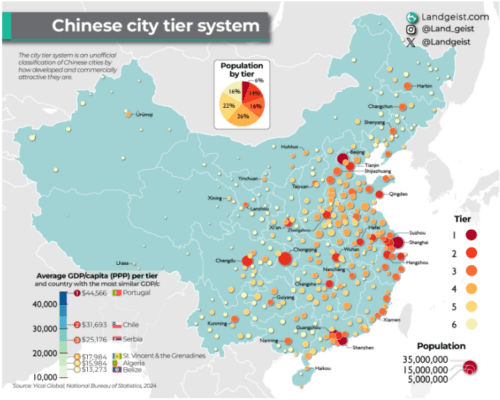
Schools unaware of China’s geography may still be familiar with the names of the three major cities below. Note that these cities all reside along the coast, the area of China where most investment and industrialization has occurred over the past 30 years. Given this history, it makes sense why most students have traditionally come from these affluent cities.
- Shenzhen: Residing just across the water from Hong Kong, Shenzhen was the first economic free trade zone to open up in 1980. Since then, it has become a powerhouse in terms of tech and manufacturing.
- Shanghai: Shanghai has also benefited from global trade due to its proximity to the Pacific. The nearby cities of Hangzhou, Changzhou, Suzhou, and Ningbo have all gained from investment in this region.
- Beijing: According to a 2021 report, Beijing has the most billionaire residents of any city in the world, and this capital city is also home to many families hoping to send their children abroad to gain an international education and experience. The nearby city of Tianjin, which acts as Beijing’s port, has also benefitted from the capital’s wealth.
These regions are known as “first-tier” cities because they are more developed than other cities in China.
Seeing that the success of these cities has been due to their focus on international trade, schools looking to enroll students from these regions may want to tailor their marketing to explain why their education can properly prepare students for a globalized world.
When marketing to prospective students, remember to consider their parents’ backgrounds and the general economies of where the students come from. After all, schooling is somewhat about preparing children for the working world, and China’s economic goals are slightly different from other countries.
A 2020 WeChat article covered the main industries people from the aforementioned cities and their affiliated regions enter for work.
| Shanghai | Finance, modern service, advanced manufacturing |
| Jiangsu Province | Electronic information, textiles, pharmaceuticals, building materials, machinery, petrochemical, light industry, and metallurgical |
| Beijing | Modern manufacturing, modern service, high-tech, urban modern agriculture, biomedicine, new energy, energy conservation and environmental protection, new energy vehicles, new materials, high-end equipment manufacturing and aerospace, finance, wholesale and retail, cultural and creative |
| Guangdong Province | Electronic information, electrical machinery, petrochemicals, textiles and clothing, food and beverages, building materials, papermaking, medicine, automobiles, shipbuilding, rail transportation equipment, nuclear power equipment, wind power equipment, and general aircraft |
| Zhejiang Province | Textiles, chemicals, pharmaceuticals, machinery, electronics |
How can this information be useful when marketing your school?
Marketing is all about understanding the customer. Parents from Shanghai, Beijing, and Shenzhen come from particular economies with unique incentives (as the above chart shows). Perhaps they don’t expect their students to enter the shipbuilding or electric vehicle industries, but they may be impressed by schools that understand their economic goals and inspire their children to think about their future.
When making marketing material for China, you may include pictures of people doing the above jobs or data on the careers of your school’s alumni.
There are other subtle ways you can address how your school prepares students for the real world:
- Do you have debates about the benefits and pitfalls of different types of energy?
- Does your school offer a finance class?
- Does your math class teach money skills?
- Do your teachers ask students to make presentations that get them to make videos?
- Do you have day trips to aerospace museums or allow children to explore their interest in cars?
- Does your science class have projects that get students interested in engineering?
Your website may want to include information (or images) that answers these questions explicitly or implicitly. In a world where most private schools have short videos showing off their sports or science facilities, successfully articulating your school’s advantages and offerings in more exact terms may set you apart from the competition.
The cities mentioned so far are just a small snapshot of China. Depending on the region, the economic goals and educational aspirations may differ; therefore, schools that understand the needs of local students and their parents have a higher chance of success.
Emerging Chinese Cities as a Source for Private School Recruitment
Traditionally, schools abroad targeted the more affluent coastal regions of China with their recruitment drives as these students were the most likely to want to study overseas. However, this seems to be changing, and according to a recent report from ChinaICAC, students hailing from China’s interior are beginning to show more interest in studying abroad.
This was seen in a recent report from ChinaICAC:
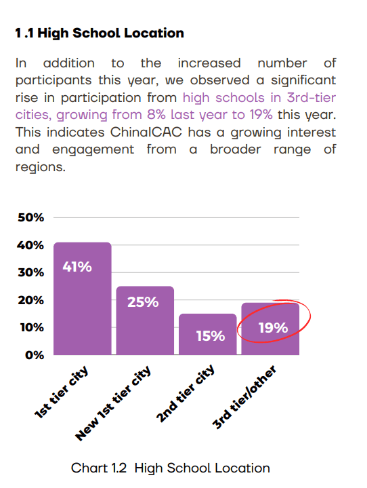
EduFair added to this by pointing out how, between 2014 and 2017, an increasing number of workers in lower positions at companies were beginning to send their children abroad to study, and these individuals are more likely to be living in lower-tier cities.
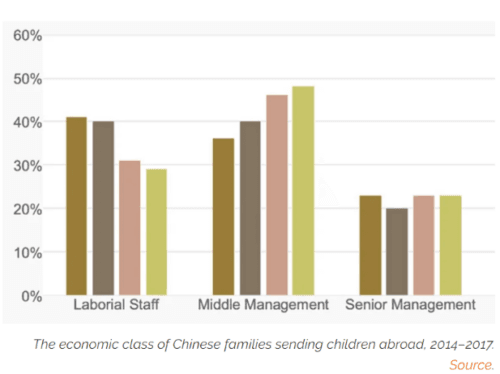
If you are a smaller school worried about the competition, consider focusing on these smaller cities. Remember that not all of these cities exist in China’s interior; cities on the coast like Shaoxing in Zhejiang or Tangshan in Hebei have room for business growth.
Note too that lower-tier cities already have significant connections to international education:
“Regionally, Tier 2 and 3 cities are home to 62.1% of China’s international schools. Tier 1 cities Beijing and Shanghai account for 11.2% and 11.9% respectively. Guangdong, which includes two Tier 1 cities as well as many Tier 2+ cities, accounted for 14.8%.”
Many of these international schools in China are directly linked to institutions abroad; therefore, you could consider opening a school in one of these smaller cities.
If that is out of your budget, another option is to work with companies in China that specialize in preparing Chinese students for studying abroad (more on that in my upcoming articles).
Although the Chinese government has been trying to develop central and western China since the turn of the century, more people have moved away from cities like Shanghai and Beijing in recent years as life there has become more stressful, and businesses have followed suit.
There are four cities in particular you should pay attention to: Hefei, Chengdu, Chongqing, and Kunming.
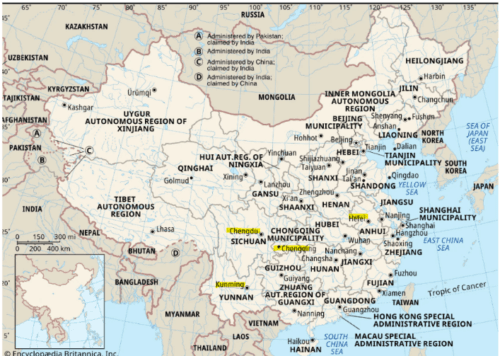
Hefei, for example, is currently focusing on becoming a tech hub. This could be a route for your school to promote its science department.
Chongqing has similar goals, though its location in western China will allow it to play a larger role in developing areas further west. Chengdu is also one of the top 25 cities globally for scientific research output and has the best financial industry of any city in that region.
As you can see from the above map, Kunming is geographically close to Southeast Asia. In a subsequent article, I will talk more about the growing importance of this part of China due to its proximity to other countries in the region.
As I said in the last section, understanding the market needs of a particular place may help you sell your school better. In a world where many still have a limited understanding of China, at the very least, acknowledging a person’s hometown and their local customs will show you care.
By showing interest in them, they will hopefully return the interest.
Chinese International Students’ Educational Background
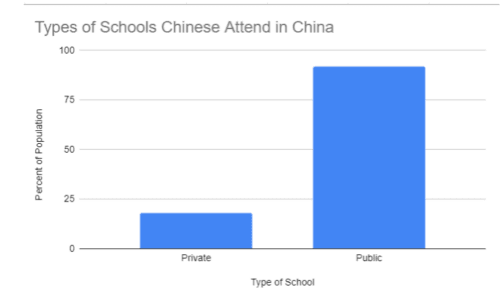
This may be surprising to you, but despite China being a one-party government, it has a larger percentage of students in private schools than the United States.
Of course, we need to investigate the true meaning of “private” in both countries, but, on paper, 18% of China’s student population attends private schools compared to 10% in the United States.
Over a third (34.37%) of all schools across China are privately run (total: 178,300).
There are around 970 accredited private international schools in China, and these institutions are well-funded and offer a range of learning facilities and extracurricular activities. Many of these schools also have foreign students and/or teachers, and the curriculum includes English and Chinese (although English is the primary language of instruction).
Unfortunately, a lack of hard data means it’s difficult to know exactly what type of high school they attended before moving abroad. During my time as an education consultant in China, most of my students preparing for overseas study came from international private schools, with the occasional few from public institutions.
Parents who feel their children’s international school education is already equipping them with adequate skills and experiences may wonder if going overseas is worth the cost.
Conversely, some families feel their children’s international school teachers lack the necessary skills and qualifications (which is a complaint I heard very often during my time in China). Take this paragraph from a 2023 article:
“Fourth, the school’s teaching staff is not satisfactory. Many so-called “international schools” have foreign teachers who are not native English speakers, have heavy accents, and make frequent grammatical errors. Students who study here not only fail to acquire good English language skills but also are instilled with a large number of grammatical errors and strange accents, which is very detrimental to the students’ future development.”
Don’t get me wrong, many international schools and training centers in China do an excellent job teaching Chinese students English. However, given China’s large population and the lack of native English speakers, it is very tough to enforce standardization. We can see this in the salaries being presently offered in China. Even though the country is experiencing some economic problems, wages for international teachers have remained stable since the pandemic, regardless of whether a school is in Shanghai or a lesser-known city like Chengdu. This shows that there is market demand for teachers.
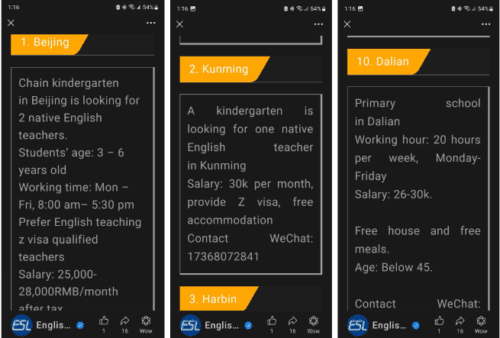
The conversation above is important for any school outside of China hoping to recruit students in the country. By understanding the general culture around English and international education, your school can better communicate why families should choose you based on the values of trust and professionalism.
However, be mindful that your target audience will consist of families with a range of English language skills who have concerns about the quality of Chinese education and may question the value of sending their child abroad.
Dividing China into two areas based on their relationship to international education is important; generally, families in Shanghai, Beijing, and Shenzhen will have better English skills than those from central China.
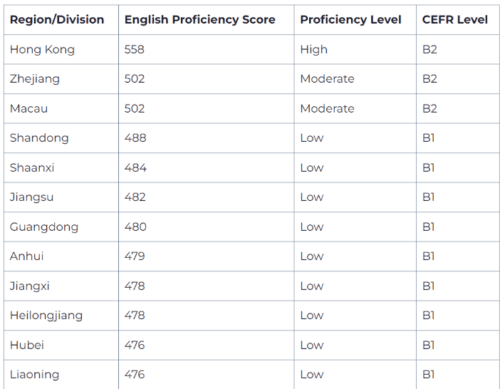
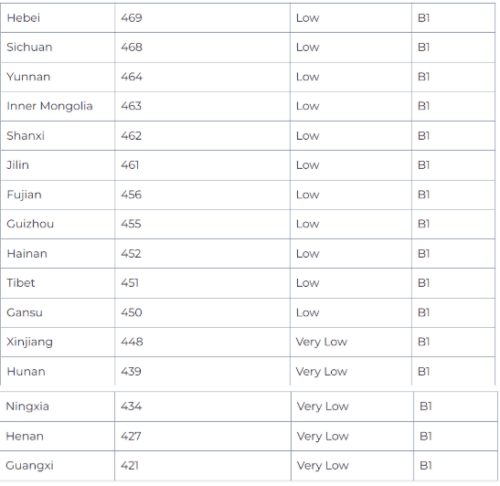
Remember that many parents wishing to send their children abroad came of age in the past fifteen years and will have also attended schooling outside of China (or have better English proficiency than the previous generations).
In some cases, these internationally-minded individuals may be harder to advertise to (and convince) than parents in your home country!
Study Abroad Trends
Next, I will be answering the following questions:
- What countries are Chinese parents looking to send their children to in 2025, and why?
- What trends should schools be keeping tabs on?
As I said the last time, I believe my experience as a teacher of 10+ years who has lived in and studied China from various angles will provide a unique take on China’s education market that differs from your typical run-of-the-mill style of debriefing.
With my background in Chinese marketing, politics, and anthropology, I will not only be explaining what is happening with Chinese students, but I will also be giving my opinion on why certain shifts are occurring.
Where are Chinese Students Studying in 2025?
Chinese students have played a significant role in the education industry for many years now. In 2024, around 37,500 students went abroad for secondary education, and even more attended universities for higher education.
Given this number, it is no wonder Chinese students represent one of the largest groups attending boarding schools overseas.
According to ICEF international, Chinese students prefer the following countries the most for private schooling. (This chart contains data for “undergraduate programs and below.”)
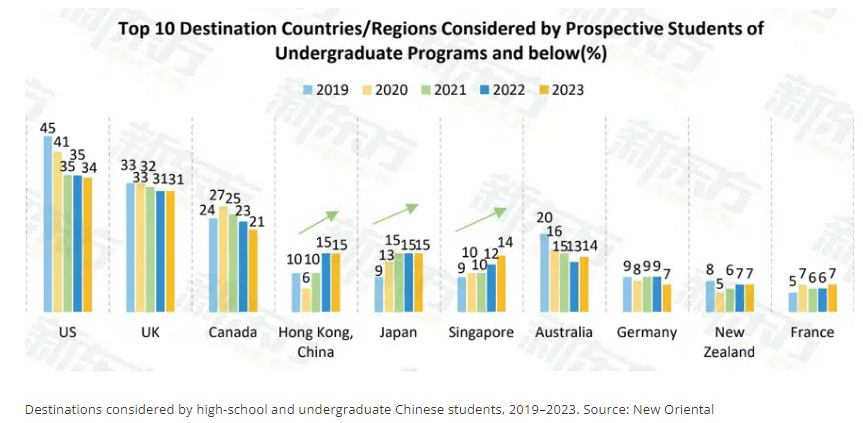
Given this, let’s quickly review each location. Understanding the macrotrends for each country may provide insights into the students’ ambitions, their families’ wishes, and what it means to market a private school abroad to prospective students in China.
Data on Chinese Students Studying in the United States
According to the above chart, the US is the number one destination for undergraduate programs and below. Although India surpassed China as the #1 source of international students in the US, China is still a close #2.
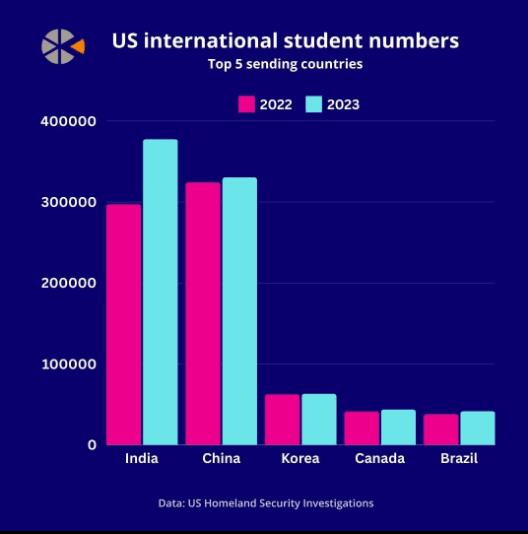
According to an article in Current Sociology, “From 2005 to 2015, the number of Chinese students attending private American high schools grew more than 70-fold, from 628 to 44,033.” Compared to the increase seen during the last decade, the number of Chinese students heading to the US has slowed in recent years.
Whatever the future trends, schools should be aware of the current reasons Chinese families are interested or have become disinterested in studying in the US.
Reasons Chinese Families Reconsider the US as a Study Destination
Of course, some of the following issues cannot be solved by schools alone, but becoming aware of the main reasons driving a family’s decisions can help schools tailor their marketing and conversations with parents of potential students.
- Geopolitics: In recent years, the trade war between the US and China has heated up, especially considering stories of people being spied on or arrested for espionage.
- Safety: People are especially concerned about gun crime in the US, so other countries where owning guns is prohibited seem a safer bet.
- Cost: American private schools tend to be more expensive than schools elsewhere. This has played an even larger role in the decision-making of Chinese families as the Chinese economy has been having a tough time.
To tackle geopolitical concerns, focus on showing why your school has a welcoming environment that treats everyone as an individual, regardless of race or nationality. For safety, express on your website all the ways your school ensures that no student gets hurt while attending, and to assuage any concerns about cost, highlight how the money is being put to good use.
It’s important to remember that macroeconomics and the global financial system mean that schools do not control all aspects of pricing.
Therefore, you will need to be more clever in your advertising and hone in on why the US is the place to be in terms of education and why your school is best placed to boost a student’s potential domestically and globally.
Over the past few decades, US schools have benefitted from the perception that the US was a world leader and a country where workers could earn higher salaries than anywhere else, and this was enhanced due to China’s position as a developing country.
The international education industry is changing (more on that later). Going forward, American schools will face a tougher time as the opportunity gap in the US has shrunk, and the above issues have hurt the US’s image (to some extent). This is a bigger problem for American universities that have become reliant on Chinese tuition fees, but secondary schools should be aware of the impact falling Chinese attendance could have on their own budgets.
But don’t worry, it’s not game over yet. I will now examine the reasons Chinese parents still consider the US the best place to send their children.
Reasons Chinese Families Choose the US as a Study Destination
Despite the data showing a drop in the number of students studying for the reasons presented above, many families still believe that a US education is the best choice for their children’s futures for the following reasons.
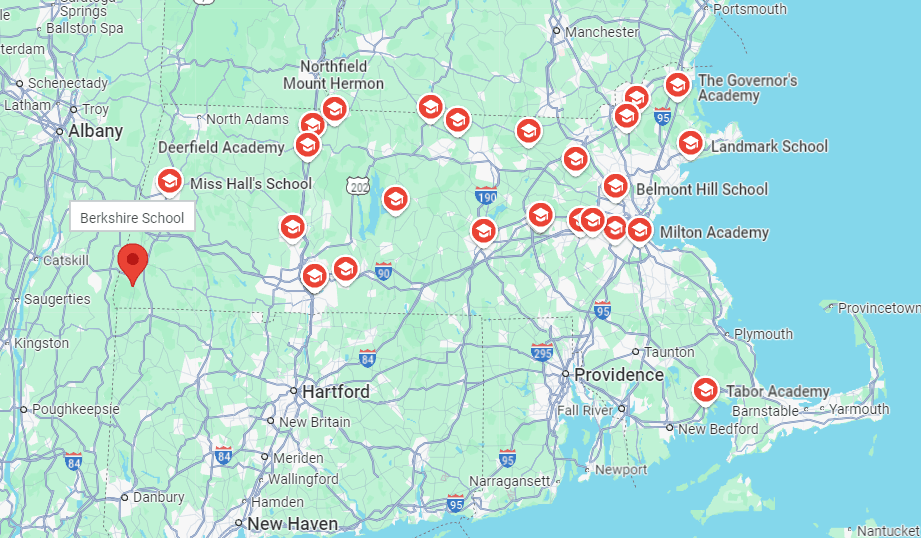
The United States still dominates the global university rankings and is home to many of the top universities in the world. Chinese parents see boarding schools as stepping stones to getting into these universities.
Further down the road, these universities are viewed as better bridges to getting into American companies, which remain at the forefront of human innovation.
China may have a large population, but it is still one of the most homogeneous countries in the world. Many parents understand the value of multiculturalism, especially as the world becomes more globalized. Studying abroad is a good way to introduce their children to different cultures.
The US prides itself on free speech and expression, and this (in the eyes of parents) extends to schooling. Although China’s education system has helped create many business leaders in recent years, it still involves a lot of repetition. Chinese class sizes range between 40–60 students, leaving less room for one-on-one time with a teacher to receive individual support.
The US’s size means plenty of natural spaces for play and discovery, and many American boarding schools are in the mountains or forests.
The US is a competitive country with high standards for its teachers. Chinese media celebrates the professionalism of these educators and how most teachers at American boarding schools are well-trained and have many years of experience.
Data on Chinese Students Studying in the United Kingdom
Although the US takes in the most Chinese students overall, the UK is still the leading boarding school choice for Chinese parents. According to the Boarding Schools’ Association, 96% of the families surveyed in 2022 reported that the UK was their preferred destination for boarding school education.
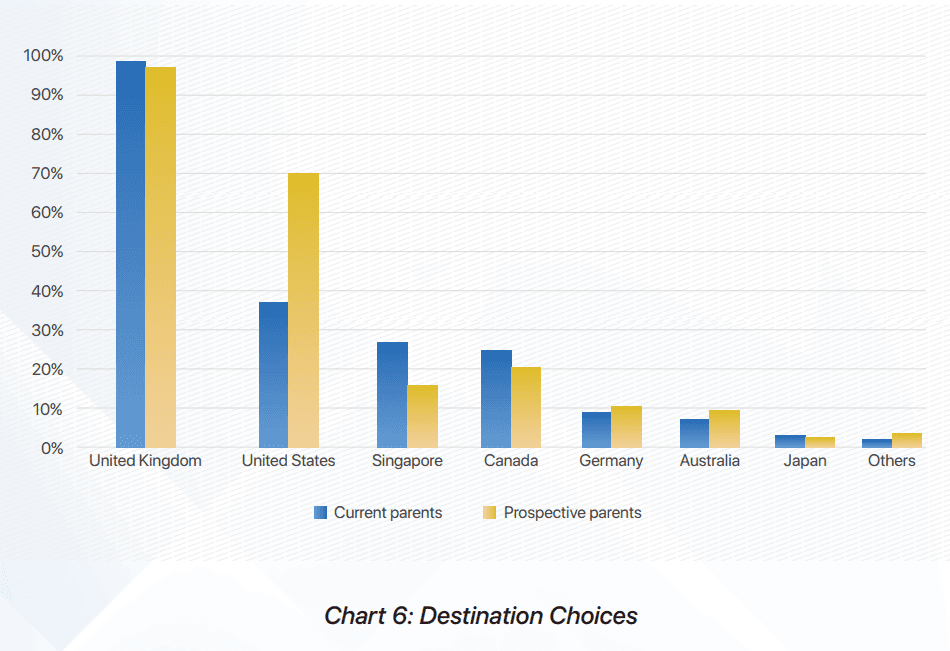
For some, the UK’s success may be surprising; however, there are some simple reasons why this may be.
Reasons Chinese Families Choose the UK as a Study Destination
When choosing a country for study, parents will undoubtedly compare one destination to another.
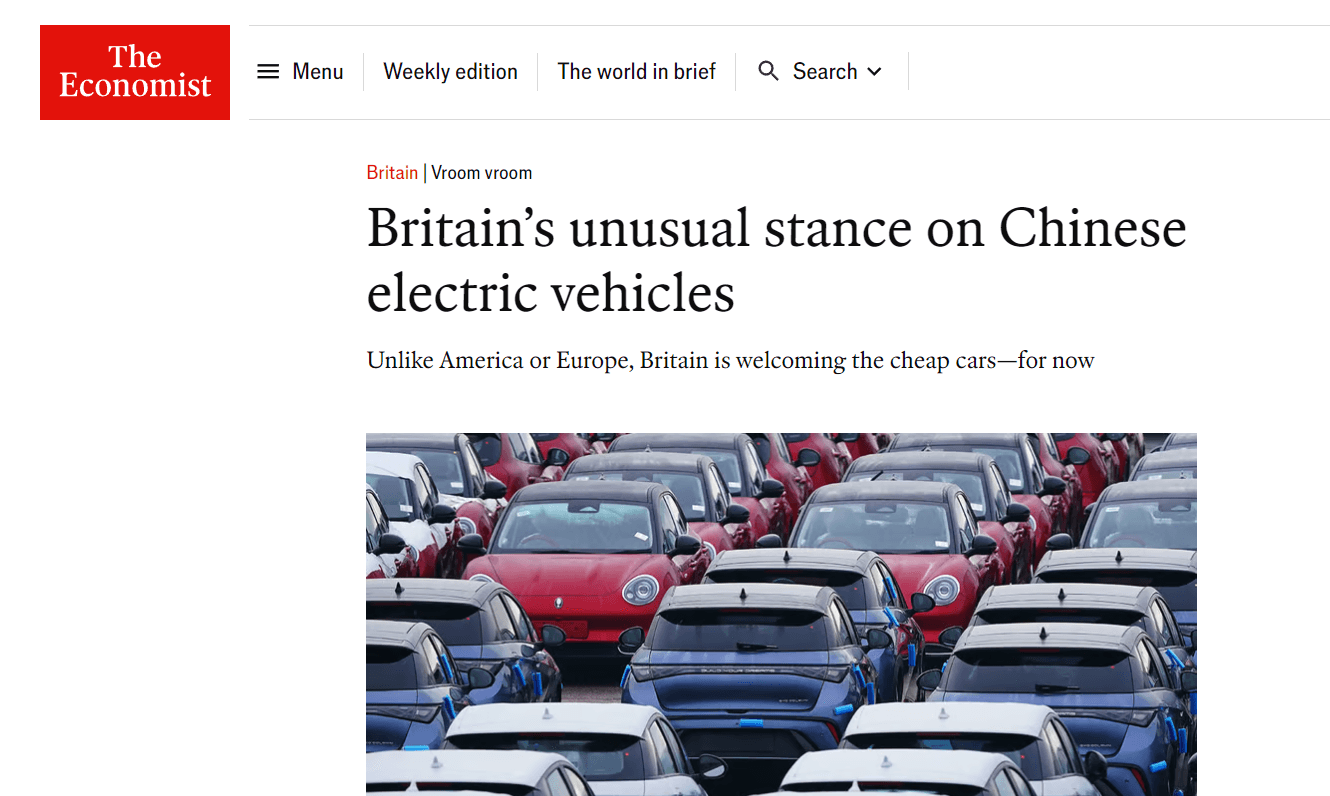
Socially, the UK does not have the same issues with guns, nor is it as expensive as the US (British boarding schools tend to be cheaper than American ones). While there have been some disagreements between the UK and China, such as the restrictions placed on Huawei, there hasn’t been a trade war anywhere near the one with the US, and Chinese electric vehicle companies, for example, have already started selling in Great Britain.
From a school or education recruitment perspective, you may believe politics has little influence, but unfortunately, that is not the case. According to a 2019 article from The Times, the trade war is a key reason many Chinese families are considering the UK over the US. Even if this data is just for higher education, one must wonder whether it also plays a role for younger students.
Safety is also paramount. As WeChat article from late 2023 had the following to say:
“Safety concerns are the top priority for wealthy Chinese families when considering study destinations. In terms of safety, the US is at a significant disadvantage—incidents like “biubiubiu” (gun violence) happen far too often. Additionally, the strained relationship between the US and China adds to the concerns. In this regard, the US simply doesn’t match the UK’s “understanding” of the situation.
One of the main reasons why many middle-class and wealthy families in China prefer sending their daughters to study in the UK is precisely because of safety. The second reason is the good environment. Aside from the concern about them possibly being influenced (referring to social or cultural differences), there really aren’t any other major issues.
When it comes to safety in the UK, the most common problems are relatively minor, such as theft—like someone stealing a phone—or scams, like telecom fraud or currency exchange scams. These incidents might result in financial loss, but in the US, they could cost lives due to the higher rates of robbery and violent crimes.”
Besides these answers to American education, here are a few other reasons Chinese families choose UK schools:
- Critical Thinking – While British schools focus on individuality like their American counterparts, they are also well known for teaching students critical thinking. For Chinese students who are used to memorization, this is a huge lure.
- English – While Americans speak English, Britain is known as the country where the language originated.
- History – The country has a long history of education and traditions, and some of the boarding schools, especially those built in a Gothic style in scenic locations, go back to the Middle Ages. To a country like China, which has great reverence for its past, this is certainly a selling point.
- British Manners – If there is one aspect of British traditions that Chinese love, it is the notion of the gentleman. Chinese parents and education consultancies note one upside to British schooling is the focus on cultivating character and discipline. In fact, every time I mentioned to a taxi driver in China that I was British, he would reply with the word “gentleman”!
- International Culture – Although this is one reason Chinese parents choose the US, British schools are also known for their inclusivity. One article mentions that 15–20% of students in some schools come from non-UK countries.
However, despite the positives, Chinese parents and consulting agencies are aware of the potential issues of living in the UK.
Reasons Chinese Families Reconsider the UK as a Study Destination
As the below chart from Boarding.org.uk shows, Chinese parents’ concerns about studying in the UK mirror those about the US.
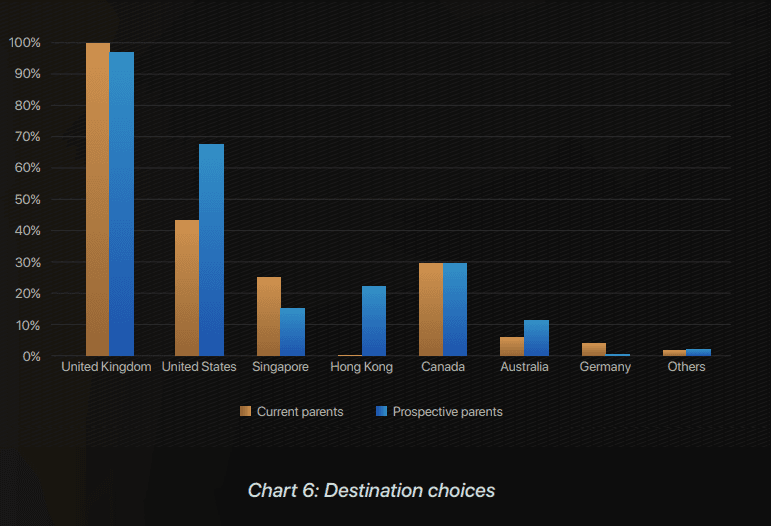
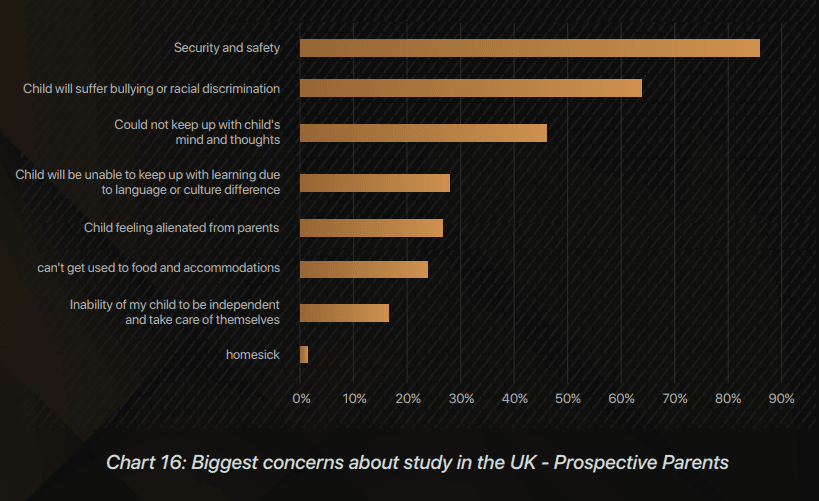
Safety is once again a primary motivation; however, this chart also illustrates that racial discrimination is high on the list; some other concerns in this chart include language skills, being alienated from parents, and food.
When creating marketing materials for Chinese families, schools can show how they attempt to overcome these challenges. A school’s website may include videos of people from diverse backgrounds speaking English or bilingual teachers (Chinese and English) explaining to parents why a school stands out in its language abilities. Having employers who speak both languages will build trust and demonstrate how your school values communication.
To ease parents’ worries about their children being far away from home, perhaps create a schedule of when students can communicate with their family (if you don’t already have one) on your website and other promotional materials.
As a British citizen who grew up in the United States and attended university in the UK with Chinese students, I can attest that the food situation in the UK is a complaint amongst international students. While the UK is a multicultural country, it still suffers from a global opinion that its food culture is subpar, so make sure you have video content demonstrating how your cafeteria provides quality international cuisine.
You could even go as far as hiring Chinese chefs to work at your school.
Data on Chinese Students Studying Abroad in Hong Kong, Malaysia, Japan, and Singapore
As we saw in the first chart in this article, countries closer to China are catching up with the United States, United Kingdom, and Canada over the past five years. The same article also shared the chart below for factors affecting families’ choice of destination.
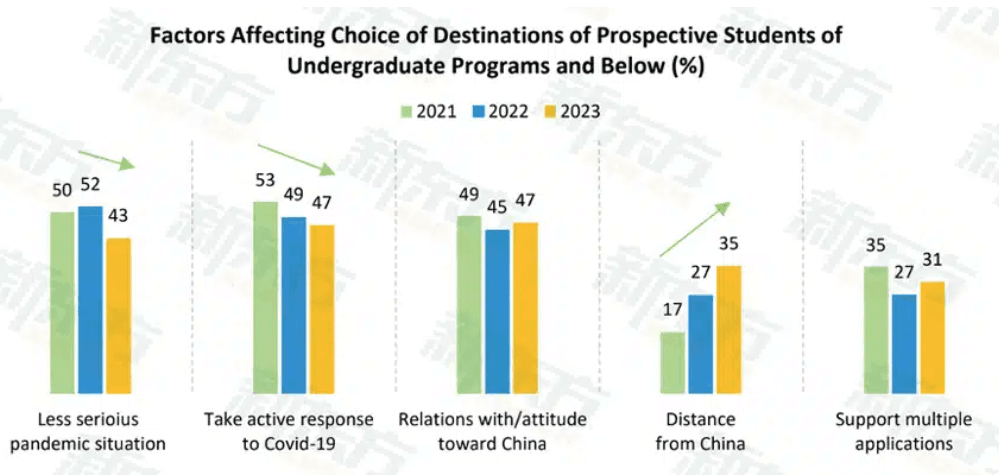
Although the pandemic is a few years behind us now, the different approaches countries took to dealing with it have left a lasting impression, particularly among people from Asia. After all, Japan, Hong Kong, China, Taiwan, and South Korea had similar lockdowns where people acted collectively compared to the resistance to regulations and COVID-19 mandates seen elsewhere.
Considering their shared values and collective responses to emergencies, Chinese families may feel other Asian countries would be safer for their children if another health situation broke out.
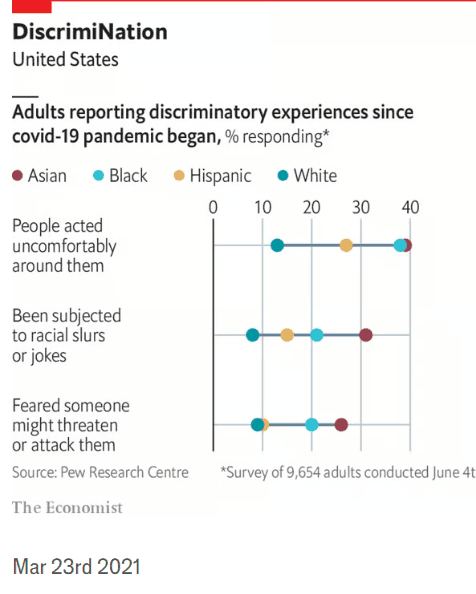
Chinese families are also concerned about how a country views China, which can be closely related to fear of racism, especially in Europe and North America, where Asians faced discrimination at the beginning of the pandemic.
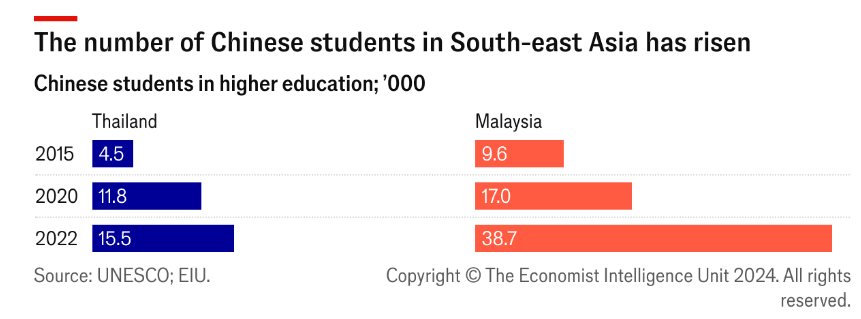
Given Hong Kong has become a lot more closely entangled with China, it makes sense that Chinese are increasingly attending school there. Plus, a Hong Kong more under China’s administration would have different views of the country.
Although Japan is an outlier, the chart from Pew Research shows that Singapore and Malaysia view China more favorably than European and North American countries.
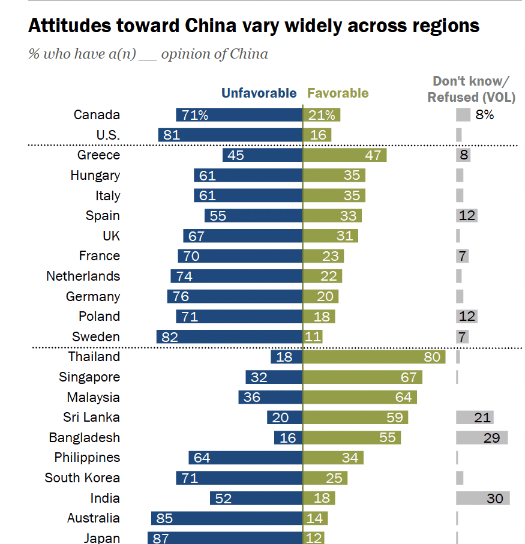
This tracks well with the data coming out of Malaysia.
“According to Education Malaysia, there was a massive spike in students from East Asia in 2023, with a total of 29,195 applications received last year, compared to 23,818 the year before.
A staggering 26,627 of them were from China, representing a noticeable increase on 2022 level, when there were 21,975 students from China studying in Malaysia.
In comparison, pre-pandemic, there were 14,142 applications from East Asia in 2019. Some 12,174 of these applicants were from China.”
Sixth Tone noted a similar trend in Singapore and even Thailand:
“For instance, in Thailand, Chinese students comprised the majority of international students in 2022, with 21,419 enrollments, a 130% increase from 9,329 in 2012.
And, as of June 2023, Singapore was home to approximately 73,200 international students, with Chinese students making up about half.”
The above two sources confirm the earlier chart’s data on Chinese preference for traveling closer to home and the cost concerns associated with the US. In contrast, Malaysia, Thailand, Singapore, and even Japan are much more affordable, not just the cost of schooling, but because of the cost of traveling to them from China.
The chart below is a few years old (2018), but it expresses the differences in the cost of international schools (monthly fees).
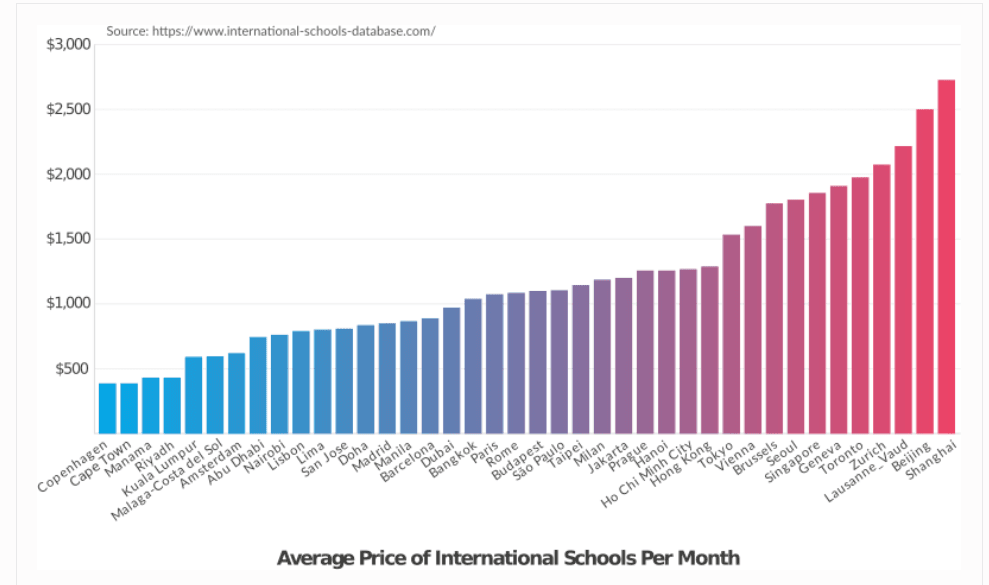
Surprisingly, Beijing and Shanghai top the list, so it’s no wonder some Chinese parents are seeking cheaper alternatives in Asia.
However, the above chart does not include American or British schools, and Prestige’s 2023 article showed how Swiss, British, and American boarding schools were the most expensive worldwide.
Food and culture also influence people’s choice of Thailand (and other Asian countries) over Western countries.
Chinese students also think Thai universities offer interesting courses. By getting into Thai boarding schools, they may believe they have an easier chance of attending these higher places of learning.
Thai universities have spent the last six years investing in attracting Chinese students by doing things like cooperating with Chinese universities; therefore, boarding schools could also be capitalizing on this new trend.
Combine this with the view that Thai visas are easier to obtain and there are more job opportunities in the country, and we can see why parents view Thailand as an option for education.
Lessons to Learn From China’s Education Industry Data
From a broader view, Chinese parents have provided their top reasons for wanting to send their children abroad.
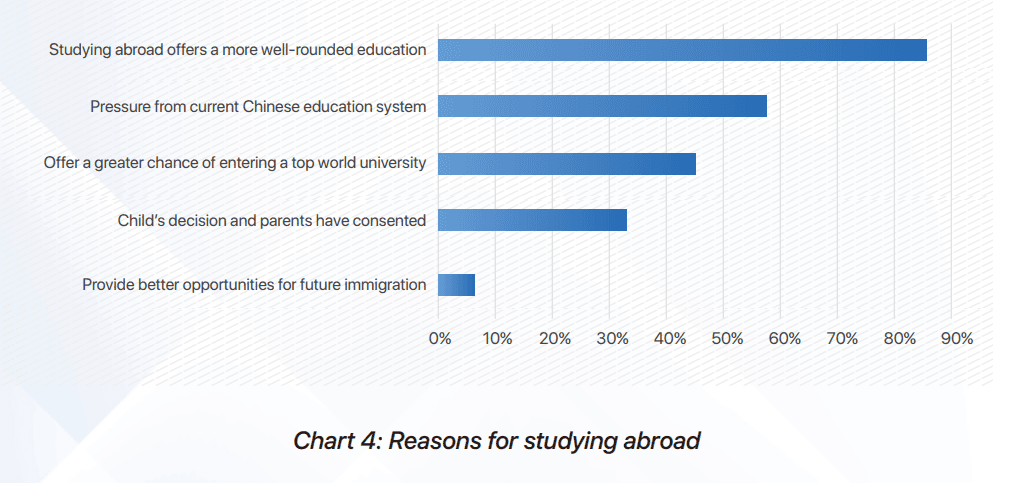
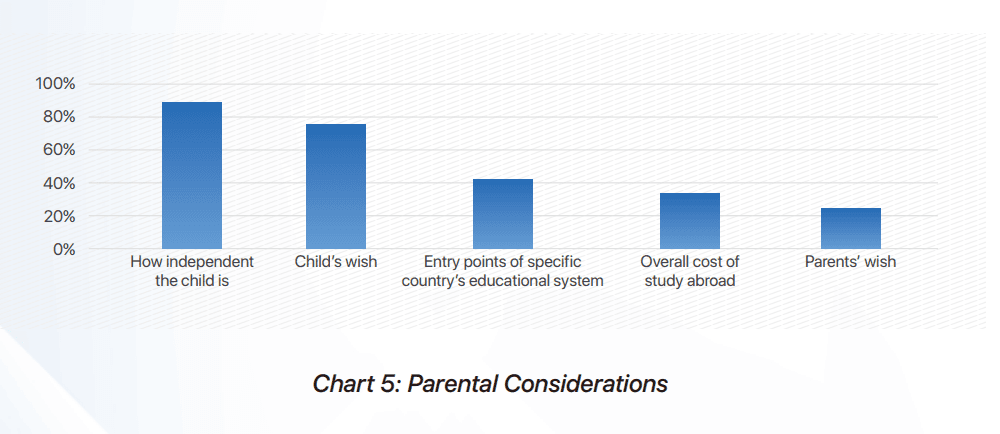
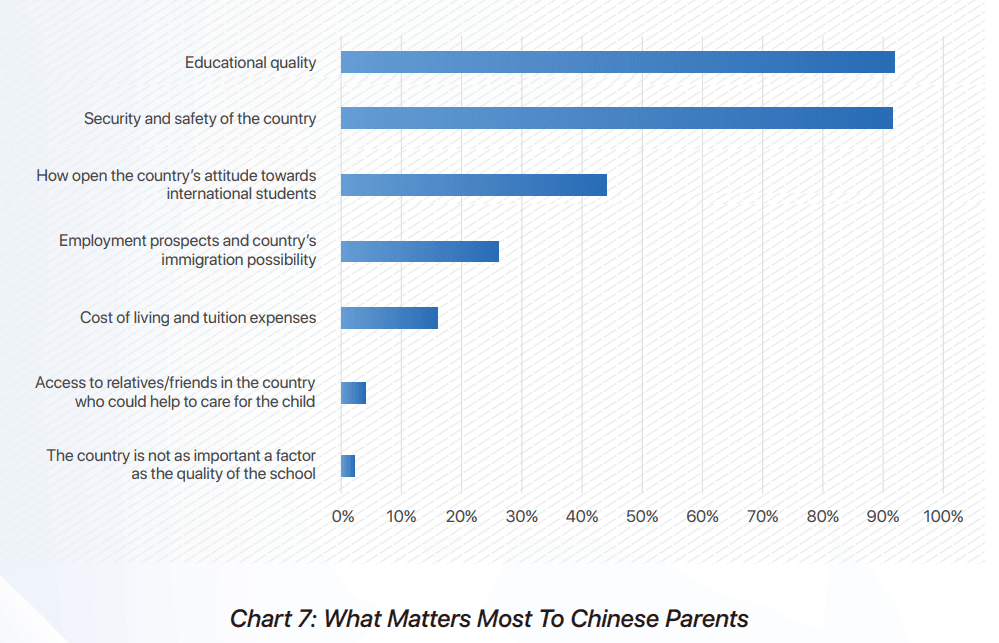
Considering the information in the above charts and the discussions we’ve had so far about individual countries, I believe private schools can learn a few important lessons about what values to include in their marketing campaigns and curriculums:
- Inclusivity: Highlight the school’s diversity to make it seem people of all nationalities and ethnicities are welcome. This will help ease geopolitical concerns and ease fears about racial discrimination.
- Safety: Pinpoint why your school is safe. Your school may be in a rural setting, outside big cities, or inside a small town.
- Efficiency: Focus on why your school offers a better education system than anywhere else. Express how students at your institution are more likely to get ahead in life.
- Language: Underline that your school has support services for foreign students with low English language skills.
- Time for Interaction With Parents: Schools can advertise that they set aside certain times every day for students to communicate with their parents. This will help with the alienation.
- Chinese Food Options: Mention in your advertising that your school makes special efforts to include Chinese cuisine.
- Emergencies: Whether you agree with Asian countries’ COVID-19 measures is not the point. If Chinese students are your intended audience and customers, you need to look at things from their perspective. Your materials don’t need to mention the pandemic directly; instead, highlight how you have measures in place to ensure the safety of students in the event of a crisis.
- Chinese Culture Activities: One way to make people from any culture feel welcome and foster positive intercultural relations is to have events at your school related to an individual’s home country.
- School Location: If you are a school in Asia, certainly draw on the desire among Chinese families to stay closer to home. For schools in North America and Europe, you could maybe talk about your school’s proximity to public transportation. (This isn’t the same thing, but it will show how easy it is for students to return home or for families to visit.)
- Comprehensive Curriculum: Emphasize how your school’s curriculum teaches more than the basic subjects to show you meet the parents’ hopes that their children become well-rounded, independent thinkers.
These lessons apply to other countries besides the ones I’ve covered. For example, the National Post recently published that, for university students, from 2019 to 2022: “The number of Chinese international students with active Canadian study permits tumbled 26 percent, from 173,315 to 128,040.”
While this isn’t related to private schools, the same concerns may also explain this drop: Price, COVID precautions, fear due to geopolitics, the monotony of courses, and the rise of better alternatives in China and elsewhere in Asia.
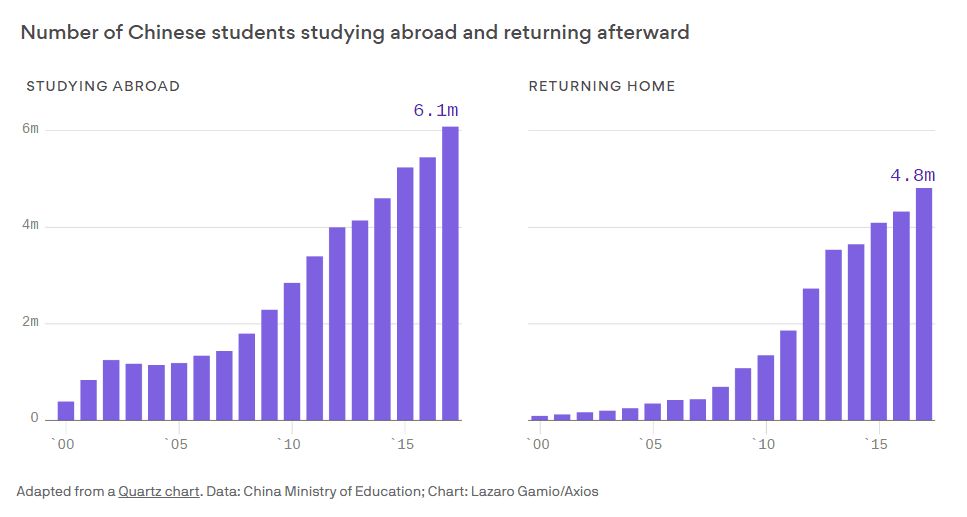
This final reason requires special attention: Although universities are not secondary school private schools, many Chinese have traditionally attended private schools abroad to go on to a foreign university in the destination country and possibly even remain for work.
However, in recent years, a growing number of Chinese are returning to China after graduating from university, and an increasing number remain in China due to domestic universities moving up in the global rankings.
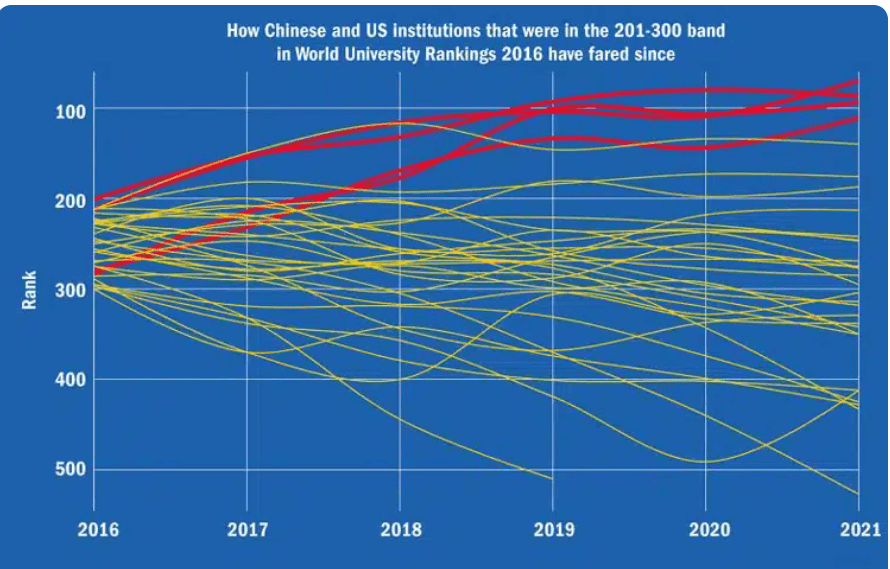
The aims of Chinese students may change, which could mean challenging times lie ahead for schools targeting students. Despite this, foreign universities, their reputations, and the education and experience they offer continue to be well-regarded.
Private secondary schools hoping to compete in this shifting market should spend more time researching students’ goals and why they may choose Asian universities over Western ones.
You may even want to go one step further and research the changing university landscape internationally to understand how your students can prepare to apply to universities back home. Afterward, consider adapting your advertising to show you’ve done this research.
Understanding China’s Current Economic Needs
Now, I’d like to expand on this point so your school can better understand your target audience. And what better way to show you care for another than to have devoted time to understanding their challenges and goals?
The Impact of the COVID-19 Pandemic, Supply Chains, and Real Estate Collapse on Decision-Making
Needless to say, China has gone through rapid change over the past few decades. In 1979, the country was poorer than most African nations, but today, China is the second-largest economy by GDP, and first by PPP (purchasing power parity).
Brought on by China becoming “the factory of the world,” this evolution allowed money to flow from manufacturing to other sectors of the economy (education included) which enabled more Chinese students to start studying abroad.

This development has helped educational institutions around the world. In 2017, Caixin Global reported that Chinese students spent about $56 billion annually studying abroad, and this trend is expected to continue.
For a long time now, Chinese have made up the largest percentage of international students studying in the United States.


Unfortunately, the COVID-19 pandemic brought with it another type of change. For the first time in many years, some are questioning China’s once-assured ascendance to the helm of the world’s economy.
Much of this was brought on by China’s response to the crisis as the country’s lockdowns halted supply chains the rest of the world relied on. As a result, companies began considering other options by moving factories to countries like Mexico, India, and Vietnam.
China’s perceived inaction in the Russian invasion of Ukraine has added fuel to this fire, with some believing the chaos may provide cover for an attack on Taiwan. The colder relations between the US and China—mentioned in the previous section—have also hurt the latter’s economy.
While all of this has been occurring, China’s real estate boom of the past decade also came crashing down, spelling bankruptcy for a few major developers, and sending apartment prices falling.
Despite all of the above, the international education industry has continued to benefit from Chinese students in the years since COVID-19.

While this is good news, schools should be aware of China’s current economic issues and how they may impact their ability to recruit new students. Three macro factors to consider:
- Families may be more willing to send their children abroad to study given the uncertainty China is currently facing.
- Financial difficulties or challenges mean some families are reconsidering further education abroad.
- Changing supply chains may lead parents to downgrade the importance of English or foreign education. This may be good for other countries that have seen more Chinese investment in recent years, such as Malaysia, Thailand, and Singapore.
These are some of China’s main uncertainties and difficulties at the moment. Now, let’s look at the reverse: China’s solutions, how your school should understand them, and how this understanding can positively impact your marketing.
Understanding China’s Economic Goals to Improve Your School’s Marketing
China’s future is not all mystery and confusion, and the government’s recent 14th Five-Year Plan is a good place to begin understanding China’s short-term goals. These plans are the products of extensive research and come out every five years to outline the goals and set the tone of the Chinese economy,
The Five-Year Plan illustrates what industries the government believes it and civilians should focus on. A private school can tailor its advertising to explain why its education curriculum can prepare Chinese students for this future if they choose to return to China later.
What are a few of the economic trends in China at the moment? There are six categories:
- China’s Belt and Road Initiative
- Biopharma
- Artificial Intelligence and High Tech
- Financial Literacy
- Respecting the Elderly
- Environment
China’s Belt and Road Initiative
This has been a key strategy in China’s international policy for over a decade and has involved China and Chinese companies investing in developing countries as well as other countries that sign up. For example, China is
- building ports in South America,
- railways in Southeast Asia,
- bridges and dams in Africa, and
- highways connecting Kazakhstan to Europe.
Given this, your school can advertise to prospective parents how your education program teaches diversity, foreign languages, and provides a holistic view of the world.
Biopharma
Over the last decade, China has been heavily investing in improving its role in the pharmaceutical industry and is now reaping the rewards. As I recently highlighted in my own Substack, China is developing more domestic drugs and publishing more research papers in top-ranking journals, and is now the country with the second-largest pharmaceutical market after the United States.
Schools could use this reason to advertise the strength of their science departments and their role in incentivizing students to pursue a career in medicine.
Artificial Intelligence and High Tech
Like many countries at the moment, China is interested in improving its AI and tech industries. After all, this is the future!
- What is your school doing to prepare students for this?
- As an elite institution, do you invite industry experts to give talks to students?
- Do you mainly teach about American, European, or Japanese companies in the field?
- Or do you make foreign students more welcome by teaching them about the strides Chinese and other countries have made in recent years?
Financial Literacy
Another issue the Chinese government focused on in 2020 in the 14th Five-year Plan was the need to expand the country’s social safety net, which has become more apparent with the current economic problems.
While your school can’t necessarily help this, you can advertise how your education prepares students for the adult world in terms of money and finances.
Even before 2020, there was a push to teach financial literacy in schools to equip the younger generations with monetary skills and knowledge. Many Millennials in China are accustomed to the economy constantly improving, so the past few years have been difficult for them.
Respecting the Elderly
Confucian culture has long valued filial piety, but there is a more urgent need these days for this value to be remembered in China. As the current data shows, China is heading in the direction of South Korea and Japan—the country’s population has started to decrease and retired citizens will make up a larger part of the citizenry in the upcoming decades.
Parents may be intrigued to know if your school offers activities that teach respect for the elderly. Do you visit retirement homes? Making friends with a retiree may also help Chinese students connect with people in the new country.
This, in turn, could tackle the earlier issues around racism and inclusivity mentioned in my last article.
Environment
The Five-Year Plan also stresses China’s plans for carbon neutrality by 2060, which is one reason why there’s been so much investment in electric vehicles recently.
Does your school focus on conservation and ecology, and do you have trips that teach respect for nature? Many students have not experienced natural environments or sceneries like those in the United States and Canada; show this in your advertising to get parents and children excited about what your school offers.
Overall, it’s important to be creative with your advertising, and understanding your customers’ needs will improve your chances of success.
Understanding China’s Demographic Situation for Your School’s Marketing
China is beginning to face a demographic situation it hasn’t seen before due to falling birth rates and a declining population. While this will be an issue moving forward, I can’t help but think this situation’s impact on the current market is somewhat overblown.
If we look at the data, while India has surpassed China in population, China still far outranks every other country.

Therefore, your school can expect a return on your investment from marketing in China long into the future.
Nevertheless, understanding the country’s demographics will help brands or schools understand their target market.

As you can see from the above, China’s Generation Alpha currently stands at around 173 million people, which is half the population of the United States, and many times larger than the number of people in California.
Another thing to consider is that just because India has more people overall, it doesn’t mean there are more people with the money to spend on international education.

The chart above shows a very different distribution of wealth across the two countries, which matters because it is (usually) high-income and upper-middle-class people who send their children abroad to study.
Finally, we need to consider how China’s demographic situation will impact schools in the future. As I mentioned earlier, although Indian students have surpassed Chinese in the United States, the latter still comes in second place.
On this point, schools need to consider how demographics and international politics will affect their enrollment numbers and, therefore, their finances in the future.
Although the United States is not presently facing similar issues (aging population and falling birth rates), it still relies on immigration to compensate for falling birth rates within the native population.


As shown in the graph directly above, there is an interconnection between China’s and the United States’ demographic trajectories. The US relies on immigration to keep its population increasing, and China comes in third place in terms of countries of origin.
As one of the easiest ways to enter the country, educational institutions play a leading role in this.
This is why I urge schools to pay attention to the dynamic relationship between the United States and China, and the influence of socio-political events on your business.
Contact Us
If you are a private school interested in marketing to Chinese students and their parents, or you have any questions about the process, please get in touch. With 15+ years of experience helping foreign brands advertise in China, we understand what students and parents want, and what it takes to get your school recognized, trending, and receiving enrollment applications.
Want to know more? On the same topic, we’ve already tackled demographics and the countries students (and their parents) consider as potential study-abroad locations. Part Four: Ways to Advertise Your School in China is on the way very soon.
You can follow our newsletter to keep up-to-date with this series and everything else going on in the world’s second-largest economy.