
When it comes to advertising in China, many sites and self-declared specialists tell you what they think is the best way to go about it. The truth is that the Chinese retail market is complex and very different from the West. When you think you’ve cracked the code, the rules change again.
Fortunately, you have come to the right place. Of course, we will cover the essentials and basics, but more importantly, we translate what that means into practice and break it down into actionable steps for marketers—something we also apply in our Chinese advertising service for brands entering the China market. Real-life case studies and almost 20 years of running successful campaigns across China’s most popular platforms demonstrate that we know exactly what works (and what doesn’t work).
This article will highlight the latest trends and advertising tactics against the shifting digital landscape. We aim to guide you on where and how to effectively run China advertising—from ever-popular social media giants like WeChat and Rednote to increasingly influential key opinion leaders (KOLs). This is relevant for all foreign businesses and brands looking to attract Chinese customers.
Our promise: Our beginner-friendly guide contains everything you need to get started for under 10,000 USD.
Let’s get started.
Why China Advertising
A quick look at the news, and among all the catastrophes and calamities one thing stands out: China is on the fast track with no plans to slow down. An increasingly prosperous population of more than 1.4 billion amongst a booming economy makes the Chinese market one that brands simply cannot afford to ignore.
We wish it were as simple as having a presence on WeChat with some nice pictures and your company slogan in Chinese (thanks to Google Translate).
It’s about resonating with Chinese consumers; meeting them where they are, and responding to their needs and preferences. It’s about building a meaningful relationship that respects cultural nuances and differences.
Building an online presence in the Chinese market organically (with valuable, fun, and educational content) is a great way to get started. But the reality is, to cut through the noise of the bustling Chinese online landscape, advertising is a must.
Don’t get us wrong, you don’t have to spend millions on Chinese advertising like some uber-popular sports or coffee brand. Of course, bigger budgets lead to bigger results; however, you can get started with a small one. But, the truth is, you do need one.
With the finance team breathing down your neck, your boss demanding “growth in the East,” and the pressure to meet your brand sales and KPIs, we’re here to show you how to squeeze the most out of every Chinese advertising dollar; how to get optimal results with the smallest investment required.
A Few Fast Facts
We love data-driven insights. And this includes some facts and figures on the Chinese advertising market.
Did you know…?
- China is the largest search advertising market worldwide.
- The Chinese advertising market is expected to surpass 250 billion USD in 2025.
- Globally, 89% of total ad spending will be digital by 2029.
- Data analytics and AI are increasingly leveraged to personalize ads and optimize campaigns in China.
Now that we hopefully have your attention, let’s dive into the advertising channels in China, including an analysis of who they are for and how to get started.
Advertising Channels: Comparison
The key difference between people who find your content on a search engine and other online channels is the intent. On search engines, users actively seek information or solutions to their problems, so showing up here allows brands to pull prospective buyers to their products or services and convert them into clients.
The big advantage: Even as a foreign brand, you have access to China’s more than 1.1 billion internet users, of whom about 75% use search engines.
Other channels are called push channels, meaning people hang out there—online or offline—going about their lives, and you have the opportunity to nudge them with your ad and fulfill a need they have or maybe didn’t even know they had.
Just like everywhere around the world, social media‘s popularity continues to grow in China with no end in sight. This makes it a great place to reach and chat with a generally younger audience about your brand to raise your profile, which ultimately should result in sales.
Foreign companies have a unique opportunity to position themselves as an aspirational “Western lifestyle” brand or tailor their message and unique selling point (USP) to fit the preferences of the Chinese market.
Forums like Zhihu or Baidu Tieba are lower-cost options for advertising your brand in China. The big advantage: You can engage with a focused audience (ideal for smaller or niche brands).
Key opinion leaders (KOLs) and key opinion consumers (KOCs) are highly effective for niche advertising, especially for beauty and lifestyle brands in China and outside the country. The big advantage: These influencers are also suitable for smaller brands with lower budgets as there are a variety of collaboration models. More on these two shortly.
Advertising on e-commerce platforms is perfect for consumer goods and offers a direct return on investment (ROI). However, remember that shipping your products to China from abroad is more challenging than, for example, a US-American brand within the country. Therefore, this may be more suitable for companies with existing logistics and fulfillment processes, and even warehouses in China.
Workarounds, however, like cross-border e-commerce (CBEC) platforms (Tmall Global, JD Worldwide, Kaola), make selling foreign products in China much easier. Another option is a subsection of CBEC: Daigou shopping (individual or corporate surrogate shopping), which has been facing increasingly stricter regulations.
Outdoor advertising and events in China are perfect for prestigious brand visibility. That being said, they are comparatively costly and must be done in mainland China, and you will need on-site personnel or hire someone to represent your brand well. Outdoor ads can also be used to drive traffic online, for example, to WeChat (offline to online marketing). Overall, the costs and the requirement of a domestic presence make these ad types more suitable for larger brands with a bigger budget.
| Channel | Who can be targeted | Reach | Cost | Best for niches | Ideal for brands |
| Search Engines | Broad audience via keyword targeting | High | Medium–High | All niches | Small–Large |
| Social Media & Video | Broad audience according to age, interests, behavior | High | Medium | Lifestyle, tech, entertainment, education | Small–Large |
| Outdoor | Broad audience, location-based | High | High | Locally available brands and services | Large |
| E-commerce & CBEC | Audience with specific buying intent | High | Medium–High | Fashion, electronics, beauty, lifestyle, tech | Medium–Large |
| Influencers | Special interest audience, broad audience (social proof) | Medium | Low–Medium | Fashion, beauty, lifestyle, tech, luxury | Small–Medium |
| Events | Special interest groups | High | High | Entertainment, sports, tech, fashion | Large |
Let’s take a closer look at these channels, who they are for, and how to get started.
Search engines
As you probably know, Google is blocked in China. Instead, Baidu leads the domestic search engine market, followed by 360 Search (Haosou), and Sogou (owned by Tencent, the powerhouse behind WeChat).
Optimize your online content (website, landing pages, social media, etc.) so it can be found by search engines (SEO). This includes a variety of techniques from using the right keywords to technical optimization.
In addition, marketers can run paid ads on search engines (also referred to as pay-per-click [PPC] advertising).
Choosing the Ideal Platform
How do you choose between these platforms for your ads? Well, naturally, the bigger the platform, the more reach. But, this also means more competition and higher bidding prices for ads; therefore, advertising on smaller search engines in China can also be beneficial.
In our experience, Baidu’s market dominance means it’s the main search engine for China marketing, but budget permitting, 360 and Sogou can be added to reach niche audiences. We would not recommend running campaigns only on 360, and/or Sogou (and not Baidu as well). Other search engines like Shenma and Bing can also be neglected in our experience.
| Search engine | MAU | Who is there | Video tour | Ad types |
| Baidu | 676 million | “Everyone” | Baidu Tour |
|
| 360 | 120 million | White-collar workers and students | N/A |
|
| Sogou | 39 million | Students and professionals | N/A |
|
Want to learn more about either one of these search engines? Take a deep dive into Baidu, 360, and Sogou advertising at your leisure.
Baidu, 360 Search, and Sogou Ad Types
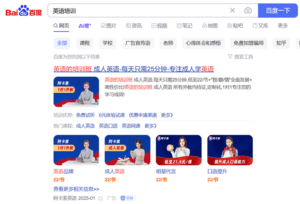
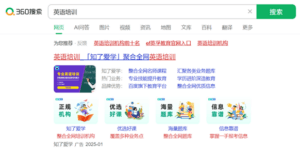
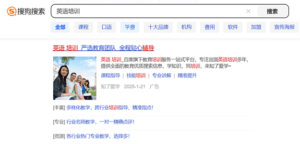
Here is a side-by-side comparison of ads on each platform when searching for “英语培训” (English learning). The “site link extensions” are the same across Baidu, 360, and Sogou.
| Baidu | 360 | Sogou |
 |  |  |
Next, let’s look more closely at the vibrant world of Chinese social media.
Social Media & Video
A presence on China’s biggest social media apps is essential for connecting with your target audience and promoting your products and services. Like search engines, organic content strategies on Chinese socials (posts, keyword optimization, etc.) are “free” except for the time marketers have to invest, and running social media ads can be a way to stand out from the crowd and boost your brand and content.
As of early 2025, there are a few updates: It is now mandatory to use Guangdiantong to set up and manage WeChat ads and all other backend solutions have been disabled.
Xiaohongshu, also known as Little Red Book or RED, is now increasingly referred to as Rednote or RedNote. There’s no real branding initiative behind this, and it all happened in the wake of TikTok’s US Band as many users started downloading Xiaohongshu as a replacement and called it Rednote.
Speaking of TikTok, while the US ban of the short-video platform primarily affects the 170 million users in the United States, the global implications are not yet clear, but it may indirectly drive the international popularity of other Chinese platforms like Xiaohongshu in the mid-to-long run. The original TikTok, Douyin in China, is unaffected by this.
Choosing the Ideal Platform
Based on our on-the-ground experience running thousands of campaigns for more than 300 clients, WeChat and Rednote are essential platforms for China marketing. Once you have these two, brands can add additional platforms depending on the specific goals, niche, and budget.
Social Media Ad Types
All platforms offer influencer collaborations (content seeding), for which we have dedicated a separate chapter.
Depending on the brand and goal, we usually recommend running native ads (in-feed ads with an organic look and feel), collaborating with influencers, opening screen ads (more expensive), and search ads.
| Social media app | MAU | Who is there | Video tour | Ad types |
| 1.3 billion | “Everyone” – all age groups and demographics | WeChat Tour |
| |
| Xiaohongshu (Rednote) | 312 million | Mainly women, millennials, and Gen Z with interests in lifestyle, beauty, and fashion | RED Tour |
|
| Douyin | 750 million | Young adults, trendsetters, short-form video consumers | Douyin Tour |
|
| 588 million | Young adults, trend-focused users, influencers | Weibo Tour |
| |
| Bilibili | 336 million | Gen Z and young adults, fans of anime, gaming, and pop culture | Bilibili Tour |
|
| Baidu Tieba | 300 million | Younger adults, often niche communities(“bars”) | N/A |
|
| Zhihu | 81 million | Educated millennials and Gen Z interested in in-depth discussions | Zhihu Tour |
|
For a more detailed take on these popular social platforms in China, see our posts on WeChat, Rednote, Douyin, Weibo, Bilibili, Tieba, and Zhihu advertising.
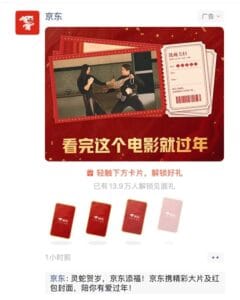
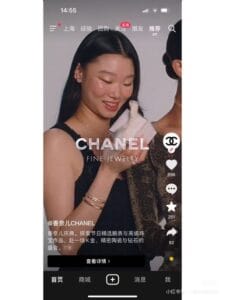
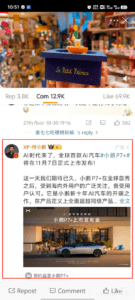
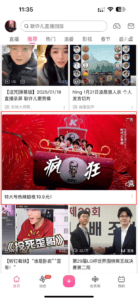
Example of Ads on WeChat, Rednote, Douyin, Weibo, Bilibili
Here is a side-by-side comparison of a newsfeed ad on China’s most popular social apps. The advertising type may have a different name on each platform, but the idea behind it is the same.
| Rednote | Douyin | Bilibili | ||
 |  |  |  |  |
Forums
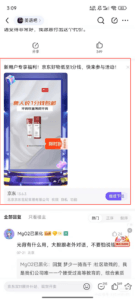
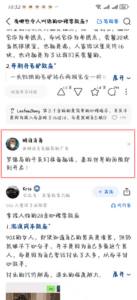
This is what ads look like on Baidu Tieba and Zhibhu (the Reddit and Quora of China).
| Baidu Tieba | Zhihu |
 |  |
Now, let’s take a look at outdoor advertising.
Outdoor Advertising
Outdoor advertising in China is ideal for driving physical foot traffic and diverting customers to stores and app downloads and is found in many places. Transit advertising, for example, can be seen in subway and bus stops, whereas mobile advertising is found on (or in) buses. And finally, the third main type is elevator advertising.
It’s rare to see any ad without a QR code, encouraging viewers to scan it with their smartphone. This means ads are not merely for brand awareness but often form the top-of-the-funnel for direct response campaigns.
Also, many ads are digital, meaning they are displayed on LED screens, and can be seen in highly frequented places like malls and airports, and even in the elevators of our Nanjing office building.
There’s no general budget recommendation as prices depend on location, duration, size, and format, but unless you have a budget of a few thousand dollars per month, don’t even bother getting started. However, the return on ad spend (ROAS) may be worth the investment.
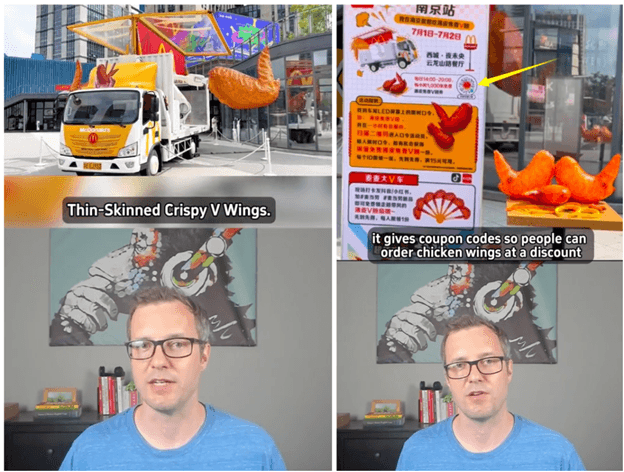
To understand the lengths some brands will go with their outdoor advertising, here’s a fun outdoor ad by McDonald’s promoting their “Thin-Skinned Crispy V Wings” that involved a tailor-made campaign for the Chinese market…using a giant chicken wing truck. You can hear what Nanjing Marketing Group founder Tait had to say about this ad campaign here.
In the next section, we’ll be examining e-commerce and cross-border platforms.
E-Commerce & CBEC
Did you know that China is the world’s largest e-commerce market?
The Chinese middle and upper classes are growing, and their interest and desire for foreign, high-quality, and reputable products is increasing. However, while the growth of the Chinese online shopping world remains strong, the competition is also intensifying, making it harder for brands to “cut through the noise.”
While overseas brands face significant challenges in selling their products on Chinese e-commerce platforms, especially if they don’t have a Chinese entity and fulfillment processes, CBEC platforms are designed specifically for this purpose and are an increasingly popular option.
Choosing the Ideal Platform
To determine the best platform(s) for your brand, consider your target audience, product type, and platform features.
For example, there are four major e-commerce platforms:
- Taobao excels with high traffic and visibility.
- Tmall, as a premium marketplace, focuses on high-quality brands with a high reputation.
- JD.com caters to well-off consumers wanting tech products and fast delivery services.
- Pinduoduo and its discount-heavy group buying model is more geared towards price-conscious buyers and bargain hunters.
Among the largest CBEC platforms, trusted names like Tmall Global and JD Worldwide are most suitable for premium and branded products with higher price points. Alternatively, Kaola specializes in niche, high-quality international lifestyle and beauty products.
E-Commerce & CBEC Platforms
Unlike the Western world, where there is basically just Amazon, there are many more large-scale marketplace options for online shopping in China.
And, as you may have guessed, Amazon is blocked in China.
BEWARE: Foreign sellers are not allowed on the platforms listed here, except for Pinduoduo, where overseas brands have limited access.
| E-commerce platform | MAU | Who is there | USP |
| Taobao (Alibaba) | 930 million | Younger, price-conscious buyers |
|
| Tmall (Alibaba) | 877 million | Middle-to-high-income consumers, brand-conscious, and premium shoppers |
|
| JD.com (privately owned) | 346 million | Tech-savvy, high-income consumers who value authenticity and quality |
|
| Pinduoduo (privately owned | 637 million | Bargain hunters, value-driven buyers |
|
When it comes to cross-border e-commerce platforms (CBEC), their system specifically allows foreign sellers. To sell on these platforms, overseas brands must have several business documents and prove the authenticity of their goods (certification). Brands are typically also required to set up a Chinese entity or partner with a local entity for fulfillment processes (logistics, customer service, and so on).
Finally, a localized branding and marketing approach is recommended to meet Chinese consumer needs.
| CBEC platforms | MAU | Number of brands | Number of products | Who is there |
| Tmall Global (Alibaba) | N/A | 30,000 | 10 million | Middle-to-high-income consumers looking for global, premium, and authentic products |
| JD Worldwide | N/A | 30,000 | 20 million | High-income buyers seeking imported and premium international brands |
| Kaola (Alibaba) | 12 million | 15,000 | 10 million | Middle-to-high-income consumers looking for high-quality imported products (health, beauty, baby) |
Yet again running ads is a great way of increasing traffic and standing out among the thousands of brands and millions of products.
Let’s now look at the advertising options on Chinese e-commerce and CBEC platforms.
E-Commerce & CBEC Ad Types
Similar to ads on social media, Chinese e-commerce and CBEC platforms offer a variety of paid advertising options and influencer collaborations (which we examine in detail in the next chapter).
| E-commerce/ CBEC platform | Display ads | Search ads | Live streaming ads | Brand zone | Other ads |
| Taobao | x | x | x | x |
|
| Tmall | x | x | x | x |
|
| JD.com | x | x | x |
| |
| Pinduoduo | x | x |
| ||
| Tmall Global | x | x | x |
| |
| JD Worldwide | x | x | x |
| |
| Kaola | x | x | x |
|
More information on Taobao advertising.
Case Study: Concept2
In our experience, e-commerce and CBEC platform ads and content work similarly to Chinese search engines and social media. For example, we ran Tmall (and Baidu) ad campaigns for Concept2, an American company selling high-quality exercise machines.
Concept2 already had some presence within China and knowledge of how to operate in the Chinese market; however, they just needed some help increasing the traffic and sales for their existing online stores on Tmall and JD, which we did for them.
Like most of our projects, we test, iterate, and then focus on what works in real life. We focus on channels, keywords, and demographics that will drive traffic and sales. With our help, Concept2 reached a very profitable ROAS within just one month!
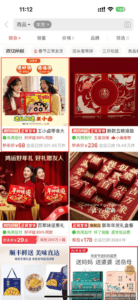
Example of Ads on Taobao, Tmall, JD.com, & Pinduoduo
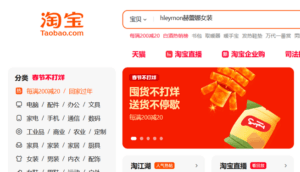
This is what ads look like on the Chinese equivalents of eBay, Etsy, Amazon, and Groupon.
| Taobao | Tmall | JD.com | Pinduoduo |
 |  |  |  |
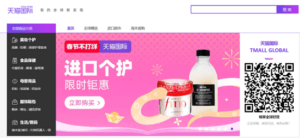
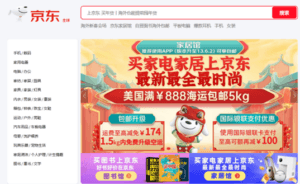
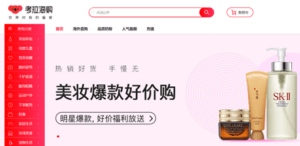
The way that ads look on CBEC platforms is quite similar.
Example of Ads on Tmall Global, JD Worldwide, & Kaola
There are no directly comparable Western websites for cross-border e-commerce, the closest one being Amazon marketplace.
| Tmall Global | JD Worldwide | Kaola |
 |  |  |
We’ve already mentioned influencer marketing a few times, so now let’s take a closer look at how this works.
Influencers
Integrating influencer marketing is a powerful strategy alongside traditional methods, which include a strong online presence and running ads on the aforementioned channels.
Types of Influencers
The Chinese influencer landscape is with KOLs and KOCs leading the scene:
- KOLs: >50,000 followers
- KOCs: 5,000–50,000 followers
- Micro-influencers: <5,000 followers
Influencers can be anyone from the person next door to industry experts and celebrities. Since KOCs are “ordinary” people, they may be more relatable and trustworthy than “professional” influencers and content creators. On the other hand, KOLs are more influential because of their larger followings and are often valued for their expertise and social impact.
Collaboration Models
The most common influencer collaboration models are paid content (sponsored posts), product reviews, affiliate marketing, and giveaways.
Influencer marketing must comply with Chinese advertising regulations, using terms like “广告” (advertisement) or “合作” (collaboration).
Where to Find Influencers for Your Campaign
Brands, whether domestic or overseas, seeking to collaborate with influencers can do so via a variety of methods. There are dedicated online platforms like ParkLU or iCreator, and marketing agencies specializing in connecting brands with influencers. Advertisers can also contact influencers who appeal to them directly.
When selecting the right person for your brand, it’s important to consider your Chinese target audience, campaign objectives, and budget. To help you make the right choice, an experienced influencer agency can provide recommendations and advice.
Our team is also happy to connect you with influencers that fit your needs and budget.
Events
Hosting or participating in industry and networking events is a great way for brands to engage directly with an audience who is already interested in them. For example, who would attend a health conference if they were not interested in this topic?
An event can be a high-profile product launch, a trade fair, or a more intimate setting like a pop-up store or workshop. Foreign brands are well advised to collaborate with local partners (agencies or event promoters) to get everything going on the ground.
Case Study: CISI
We successfully organized the CISI Wealth Management Summit with 326 registrations.

Now that you are familiar with all the advertising types, you may ask yourself how you can get started with advertising in China.
What do I need to get started?
You don’t need to have it all figured out. However, some advice from an agency that has launched countless successful ad campaigns, the following four things are absolutely mandatory to avoid failure:
- Goals for the Chinese market
- Localized website or online presence, for example, on WeChat
- Tailored landing pages with clear CTA to foster conversion
- Optimized content that will be indexed by search engines
An experienced China marketing agency and local partner can help you with all this.
The Takeaway
Yes, the Chinese (online) market is booming, offering immense potential for (overseas) brands. And yes, you should not let this opportunity pass by.
However, simply setting up a basic WeChat account, and running your brand description through Google Translate, is not enough to cut through the online noise and connect with Chinese consumers.
To succeed, it is essential to have a localized approach across the key marketing channels, which corresponds with your brand and represents your goals for the Chinese market. Once you have your presence, combine organic strategies with paid ads to raise your brand profile, engage with your Chinese audience, and sell your products and services.
Here’s how:
- Search engines: Baidu is essential, additional platforms if your budget allows
- Social media: WeChat is “non-negotiable”, other apps depend on your niche, goals, and budget
- Influencer collaborations: Various collaboration models, also suitable for smaller brands
- E-commerce/CBEC: For medium to larger brands that are prepared to deal with the fulfillment process
- Outdoor ads and events: For larger brands with the respective budget
Contact us to develop an individual strategy for your brand and get started in the Chinese market today.
PS: Keep an eye out for restricted niches and terms. Internet compliance and regulation are so extensive that we have dedicated a whole separate blog article to the topic.