
Groupon China posted their first deal today. This gives us a good chance to check out what they’ve done with the interface.
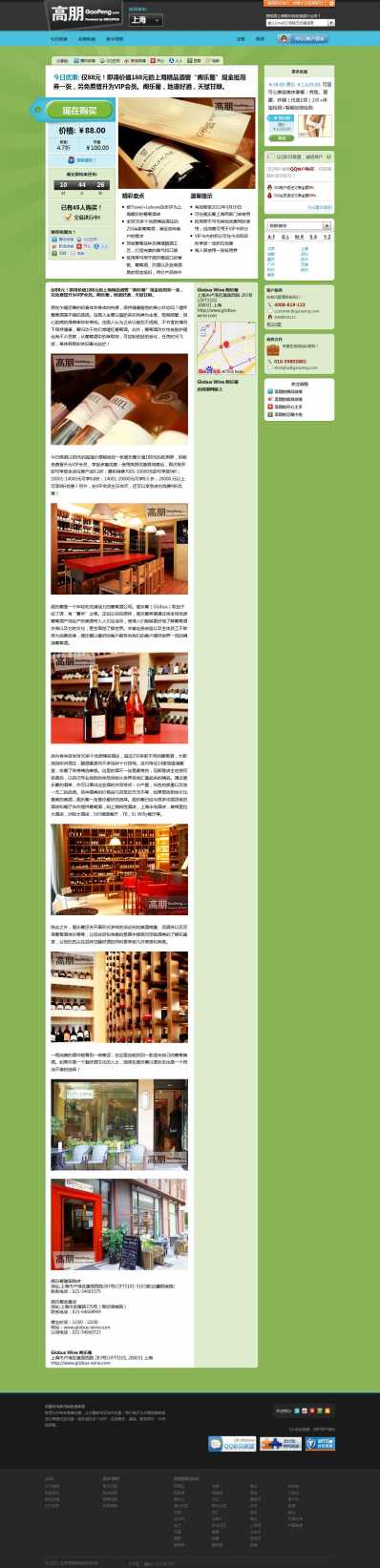
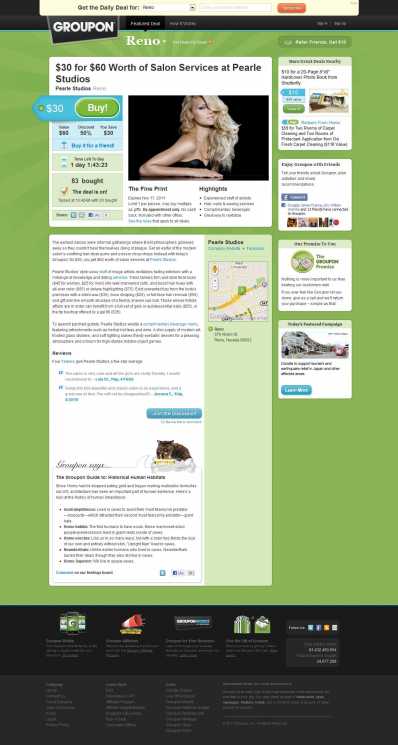
It’s obvious that Groupon China (Gaopeng.com), has chosen to make a few changes as possible. They’ve maintained a very similar design and brand image with their parent site, Groupon.com. The changes they have made reflect the different players in the Chinese Internet ecosystem, most notably the choice of social networks.
While Groupon.com makes use of Facebook and Twitter, Gaopeng.com features QQ Microblog, QQ Kongjian, Sina Microblog, Kaixin, Renren and Douban. This makes perfect sense since there are no two social networks in China that dominate the market as Twitter and Facebook do in the West. QQ has been given special attention in the blue sub-header bar, as users can sign in to Gaopeng.com using their QQ accounts, allowing over 600 million active QQ users quick access to Gaopeng.com. QQ is Groupon’s partner in China, so even in the lists of sharing icons, QQ’s platforms are displayed first, even though QQ’s microblog is less important than Sina’s microblog
Another notable difference in Gaopeng’s interactions with other platforms is their choice of map provider. While Groupon.com integrates with Google Maps, Gaopeng.com integrates with Baidu Maps.
At first, I was wondering why they made changes to several other page elements, such as the display of pricing and discount information. But it seems these aren’t modifications for the China market but are actually part of the template used for other Groupon sites, such as Groupon France and Groupon Argentina.
Below are screenshots of Gaopeng.com (on the left) and Groupon.com.
 |  |
“Gaopeng” is either an absolutely excellent or absolutely awful name. I’ll tell you which it is in my next post, and why. 🙂 For now, it’s time to sleep.