

Zhihu is often described as China’s answer to Quora, but this comparison only captures part of the picture.
In a digital ecosystem increasingly dominated by short videos and fragmented content, Zhihu remains one of the very few major Chinese platforms where long-form, text-based knowledge sharing still plays a central role.
This article provides a structured overview of Zhihu in 2026, focusing on the platform’s core characteristics, user demographics, content preferences, and—most importantly—why Zhihu continues to hold strategic value for brands and organizations.
Key Takeaways
- Zhihu’s average monthly active users (MAU) stood at approximately 83 million in 2024, reflecting a 21.2% year-on-year decline.
- As short-form and fragmented content dominate the broader market, Zhihu is still a place for rational discussion, experience-based insights, and structured explanations of complex topics.
- The majority of Zhihu users are still under 30, but this segment is shrinking, and the overall user base is maturing.
Despite slower growth, Zhihu maintains clear advantages in search engine visibility, desktop usage scenarios, and long-term informational value, making it a strategically valuable content platform.
What Kind of Platform Is Zhihu?
Among China’s major content platforms, Zhihu stands out as a knowledge-driven community built around questions and answers. Much like Quora, it encourages users to think deeply, learn systematically, and share experience-based insights through structured discussion.
Zhihu users come from a wide range of professional and social backgrounds. On the platform, discussions span from highly specialized topics such as aerospace engineering, philosophy, and technology, to practical, everyday subjects like home renovation tips, career decisions, and consumer advice.
When major social events or public issues arise, Zhihu often becomes a space for (relatively) rational long-form debate, giving it a certain degree of public discourse influence.
However, in an era where short videos and algorithm-driven feeds dominate attention, Zhihu’s content style is no longer considered “mainstream.” According to data published by Aurora Mobile (Jiguang) and MoonFox, Zhihu’s revenue performance and online activity index showed an overall downward trend from Q1 2023 to Q3 2025.
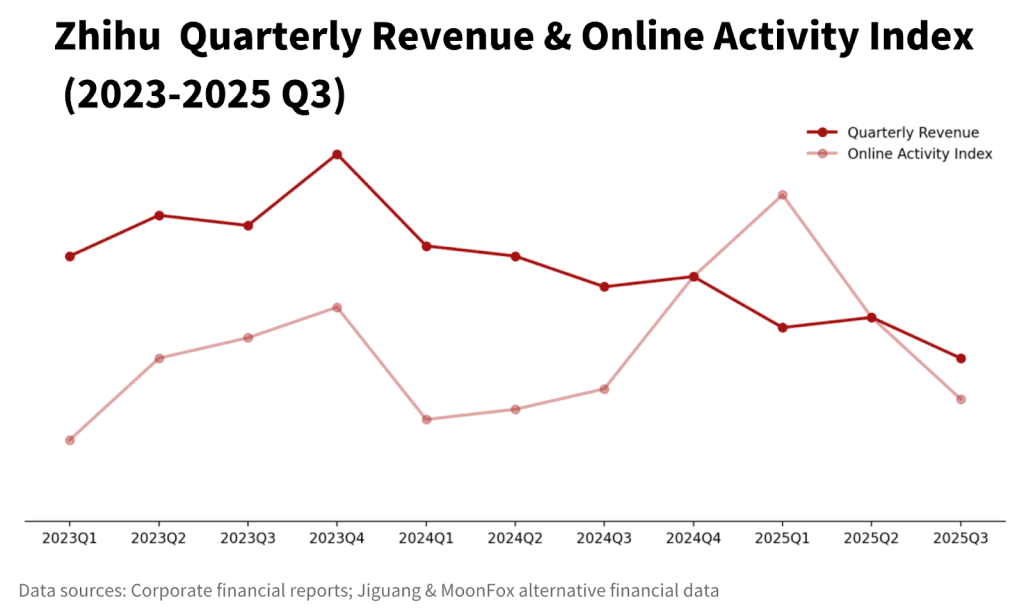
This decline, however, does not mean Zhihu has lost its value. As user behavior changes, Zhihu content is increasingly being indexed and surfaced by search engines. For many topics, Zhihu answers now function as long-term informational assets rather than short-lived social posts.
Who Are Zhihu’s Core Users?
If you spend time on Zhihu, you may notice certain recurring opening lines in answers, such as “Thanks for the invite, just landed,” or “Personally involved. The circle is small — I’ll remain anonymous.”
These are Zhihu-specific conventions. Users can be invited to answer questions, and respondents often acknowledge this at the beginning of their reply. When topics involve sensitive industry matters, authors may choose to engage anonymously to protect their real-world identity.
These phrases have long been mocked as symbols of Zhihu’s supposed “elite culture,” leading to jokes that everyone on Zhihu graduated from a top university and earns a seven-figure salary. But what does the data actually show?
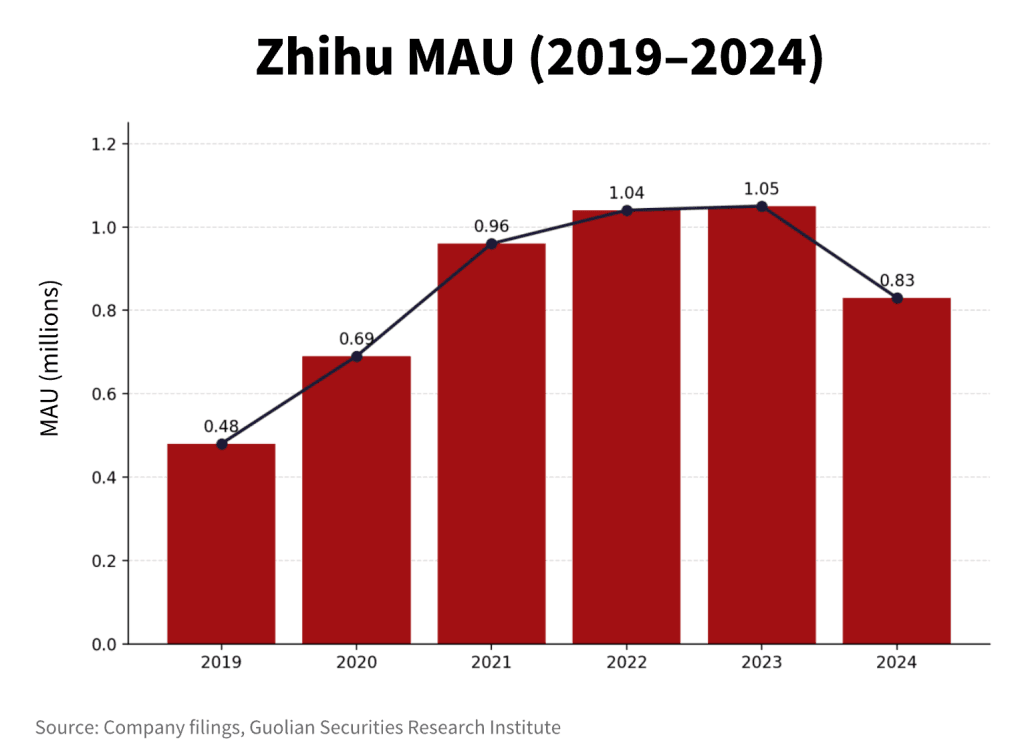
According to Zhihu’s 2024 financial report, the platform’s average monthly active users (MAU) reached 83 million, representing a 21.2% year-on-year decline. Historical data from 2019 to 2024 shows a clear downward trend in overall MAU.
Gender Distribution
Zhihu’s Q2 2025 financial report shows female users account for 59.3% of active users, while male users account for 40.7%. This marks a noticeable shift from earlier years, when the platform was often perceived as male-dominated.
Age Distribution
Zhihu still skews young, but its user structure is clearly evolving.
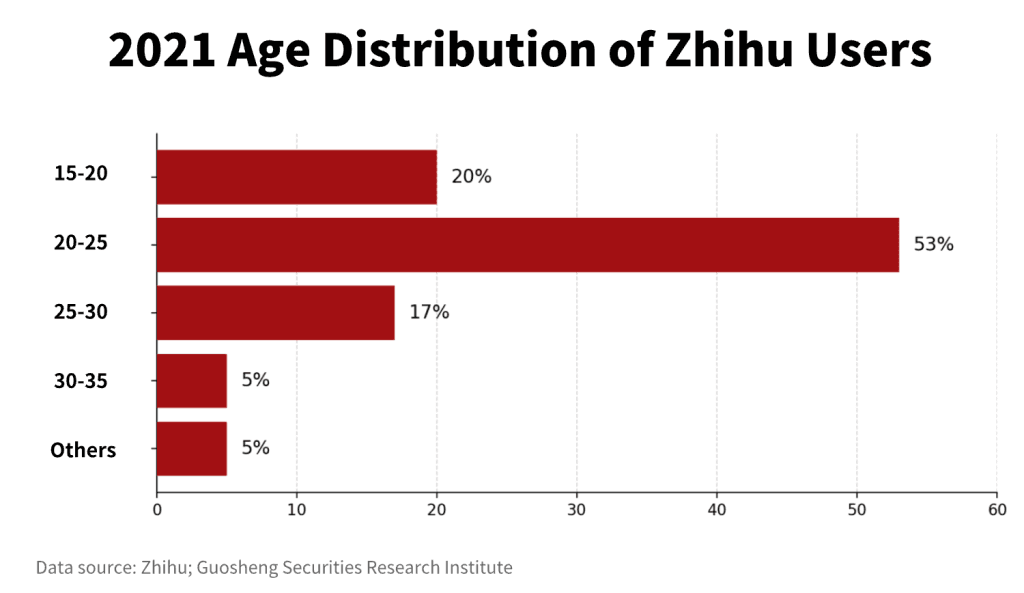
Data from Zhihu and Guosheng Securities in 2021 showed that 90% of users were under 30, with the 20–25 age group alone accounting for 53%. These users were primarily students or individuals at the early stages of their careers.
By Q2 2025, however, the proportion of active users under 30 had declined to 74.1%, indicating a gradual aging and stabilization of the user base.
Education Level
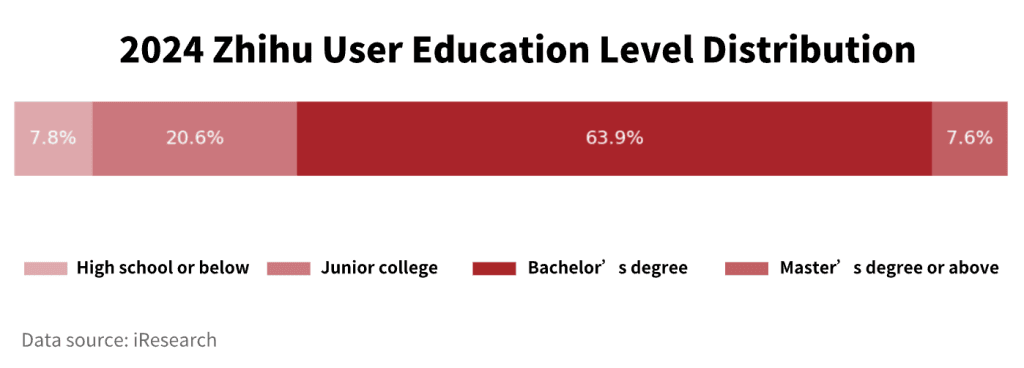
A 2024 iResearch survey found that, based on a sample of 1,500 Zhihu users, the platform still has a relatively high overall education level:
- Bachelor’s degree or higher – 71.5%
- Master’s degree or above – 7.6%
- High school education or below – 7.8%
This remains one of Zhihu’s most distinctive characteristics compared to other mainstream Chinese platforms.
City Tier Distribution
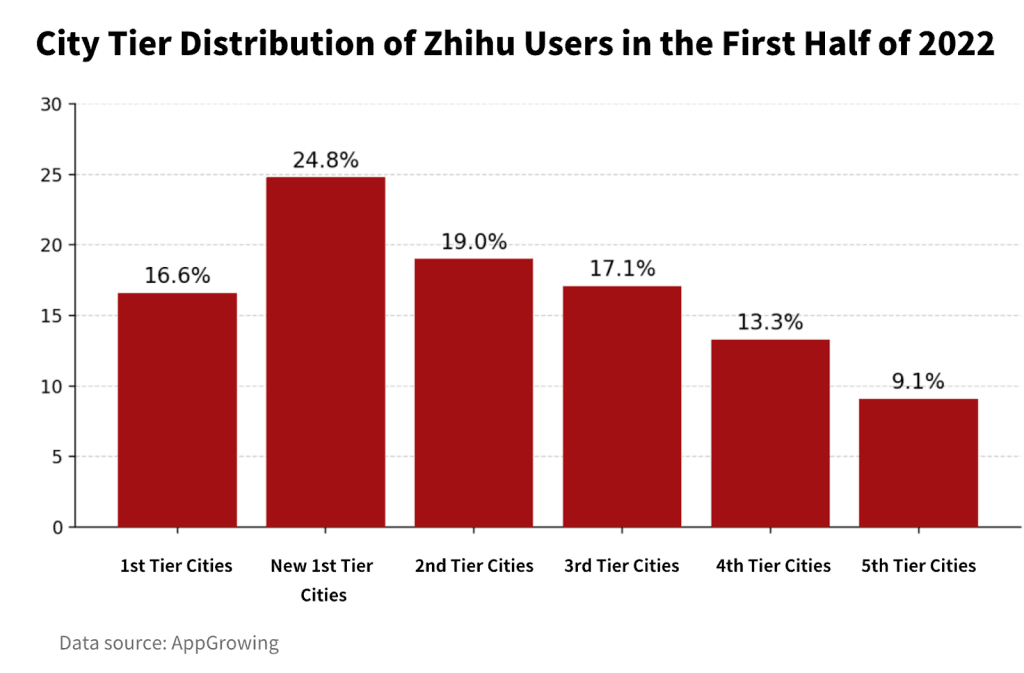
According to AppGrowing data from the first half of 2022, Zhihu users are heavily concentrated in new first-tier cities, such as Hangzhou, Nanjing, Chengdu, and Chongqing.
Users from new first-tier cities account for 24.8% of the total user base, making this the single largest regional segment.
What Kind of Content Do Zhihu Users Prefer?
On Zhihu, readers do not only evaluate the content itself—they also pay close attention to who is writing it. Users tend to check whether the author has relevant professional experience, firsthand involvement, or a credible background related to the topic.
As a result, experience-based content is particularly well received. Whether the experience comes from industry practice or personal experimentation, content that clearly explains the origin and what actually happened is far more likely to earn trust.
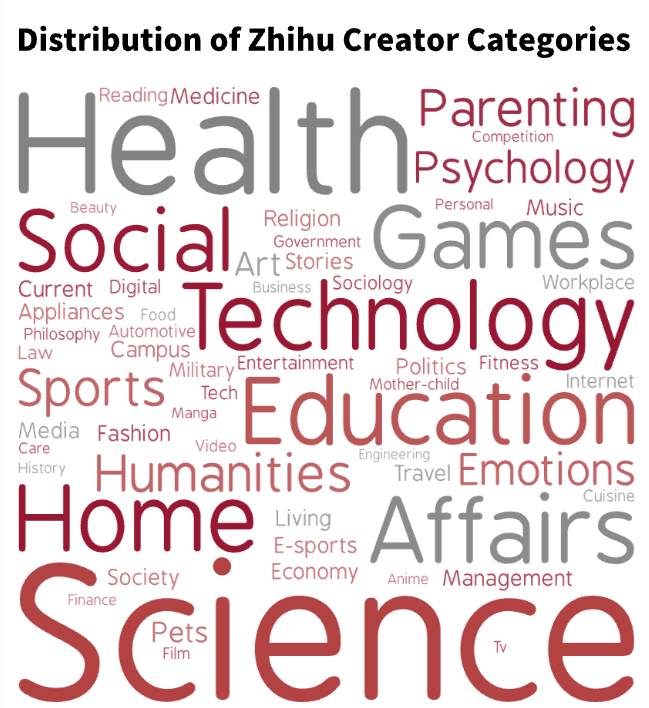
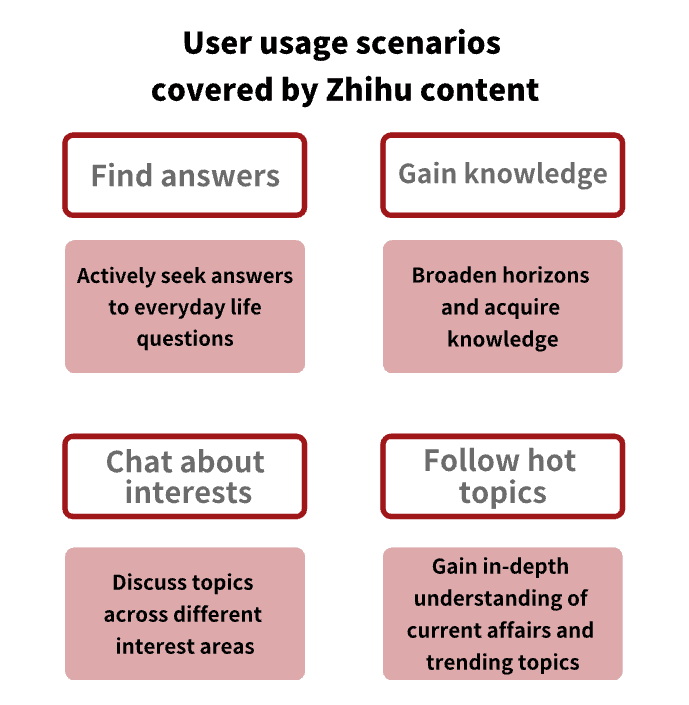
According to iResearch’s 2024 analysis of Zhihu creator categories and usage scenarios, the platform supports a wide range of knowledge-driven use cases, including career development, education, and consumer decision-making.
In terms of writing style, Zhihu users are not opposed to long content. However, they strongly prefer clear structure and early conclusions. Many high-quality answers and articles begin with a direct conclusion in the first sentence, followed by a step-by-step explanation. This structure serves both users who want a quick answer and those who are willing to read in depth.
In summary, Zhihu users tend to favor content that is
- professionally grounded and based on real experience,
- structured clearly, with conclusions presented upfront, and
- persuasive, detailed, and logically coherent.
Why Do We Recommend Publishing Content on Zhihu for Marketing Purposes?
The data clearly demonstrates that Zhihu is no longer a fast-growing platform. In some areas, it is even experiencing decline. However, from the perspective of search visibility and user behavior, Zhihu still offers unique advantages.
Zhihu Content Is Easily Indexed by Baidu
Zhihu’s question-based structure naturally aligns with search engine logic. Clear topic framing, precise keywords, and in-depth answers make Zhihu content highly compatible with Baidu’s ranking mechanisms.
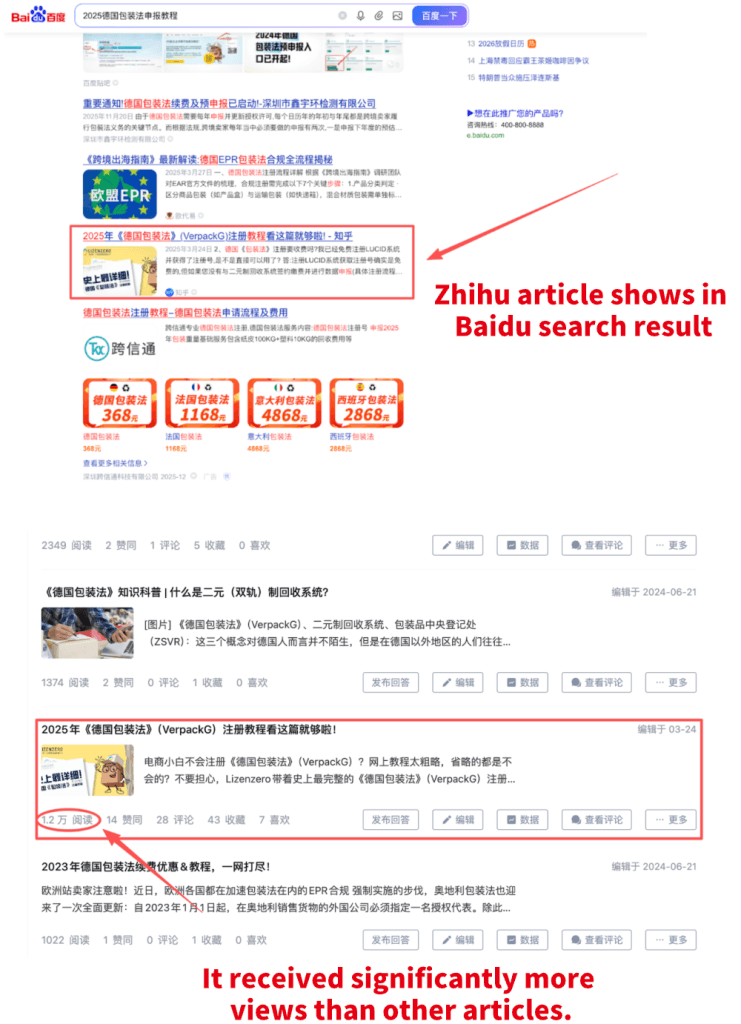
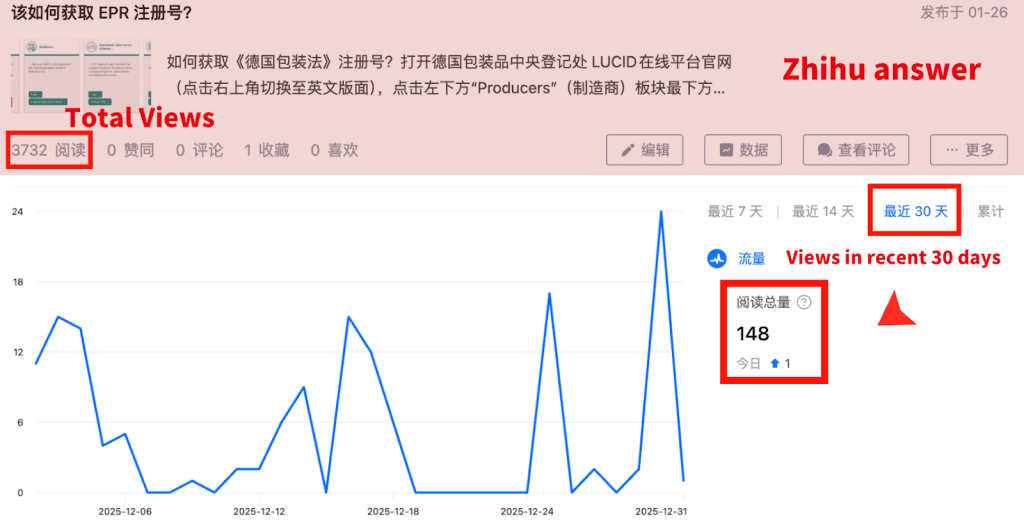
When Baidu indexes Zhihu articles or answers, they can generate continuous, compounding traffic over time. For example, an article Nanjing Marketing Group published on Zhihu for its client Lizenzero significantly outperformed other posts after being indexed by Baidu.
Strong Advantages of Desktop Usage Scenarios
Most major Chinese social platforms (such as Rednote, Douyin, and WeChat) are heavily optimized for mobile consumption and rely almost entirely on internal recommendation algorithms. Their content is rarely indexed by search engines.
Zhihu, by contrast, performs particularly well on desktop search and reading scenarios. For brands targeting users who research, compare, and make decisions on computers (especially in B2B contexts), Zhihu is worth using for marketing.
Long-Term Content Value
On most Chinese platforms, content exposure depends heavily on short-term engagement. If a post does not perform well within the first two or three days, it quickly disappears from recommendation feeds.
Zhihu content, once indexed by search engines, can continue to attract organic traffic for months or even years.
Friendly Verification for Overseas Companies
Based on NMG’s long-term experience helping international brands enter China, Zhihu has one of the highest approval rates for account registration and verification for overseas entities. In comparison, platforms like Rednote and WeChat typically require more complex documentation and stricter review processes.
For companies looking to establish an early presence and build credibility quickly, Zhihu is often the most accessible starting point.
Final Thoughts
Overall, Zhihu remains a platform we actively recommend for content publishing. While it may no longer be the most attention-grabbing or trend-driven channel, it offers stable and clearly defined value in information delivery, search visibility, and long-term content accumulation.
For businesses still in the early stages of entering the Chinese market, especially those with low brand awareness or complex offerings that require explanation, Zhihu is particularly well-suited. Through systematic, question-driven content, brands can clearly explain what they do, why it matters, and how it works.
Compared with platforms that prioritize instant exposure, Zhihu is better positioned as a long-term content asset: Searchable, readable, and capable of building understanding and trust over time.