

Rednote hit the ground running in early 2025 thanks to the looming shadow of the USA’s TikTok ban. Many Americans and Europeans who migrated to the app were excited that it looked similar to some of their own (like Instagram and Pinterest).
Hopefully, Rednote’s success will lead to more Western users becoming more interested in China’s video streaming websites. It could even encourage other apps to consider including and catering more to international users.
Perhaps you’re a company or an influencer interested in expanding into the world of China’s social media; maybe you’re just a common netizen intrigued by what other apps China offers for video content.
Whatever reason you have stumbled across my article here today, welcome. This post is an opportunity to learn about the different characteristics of China’s video streaming apps and websites from someone who has lived in China and studied the country for over 10 years.
Rednote (Xiaohongshu)

Main Audience: Middle-class millennial and Gen Z women
Users: 300 million
Video Length: Usually below three minutes
Genres: Lifestyle
International Version: Yes
Since we have already talked about it, let’s begin with Rednote. In China, the book is known as Xiaohongshu, or “Little Red Note” and there is a common misconception that the name pays homage to Mao’s Red Book. Instead, it comes from the colors of Stanford Business School where the company’s founder studied.
Rednote’s audience over the past decade has primarily been Millennials and younger women interested in learning about lifestyle-related content: Sharing tips about fashion, travel, cooking, technology, and other products. The app (and its native users) has seen a change in the content over the last month, as more English native speakers have moved to Rednote and begun posting TikTok content of all genres.
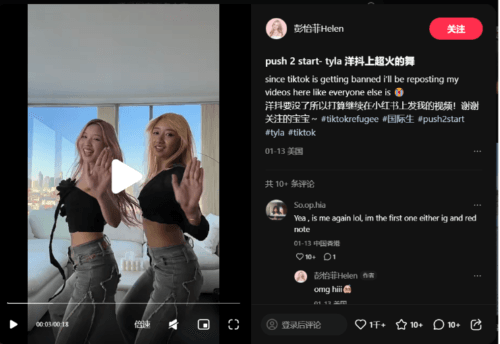
Sharing videos on Rednote is straightforward. After setting up an account, you can immediately begin posting videos.
Remember that you cannot sell services or products without applying for a professional account.
Douyin

Main Audience: All ages
Users: 755 million
Video Length: Usually below three minutes
Genres: All
International Version: No
Non-Chinese will probably be most familiar with Douyin, the original TikTok, but they are separate apps, with the former only found in China.
There are a few differences between this app and Rednote, but the biggest one is it (currently) allows both Chinese and Western users to post on the app regardless of their location.
This difference between the two should not be overlooked. The app can’t be found on the US app store so anyone wanting to use it must download the app from its website, and it’s also more difficult to set up an account outside of China.
While Douyin is similar to Rednote in that people tend to post short videos, its subject matter and audience are broader. Like with TikTok, people post content on just about anything on Douyin, as long as it doesn’t become too political, of course.
International journalists have noticed that Douyin’s algorithm differs from TikTok’s, with the Chinese app preferring educational content.
BiliBili

Main Audience: Gen Z
Users: 341 million
Video Length: Longer (3 min+)
Genres: Gaming and anime (but growing in others)
International Version: No
Video-sharing app Bilibili is often compared to YouTube. Initially, Chinese netizens used Bilibili (website and app version) mainly for gaming and anime videos; however, over the past decade, the app has evolved into something more. The 2022 paper A Study in the Changing Trends of Popular Videos on Bilibili produced the following chart highlighting the growth in other content areas.
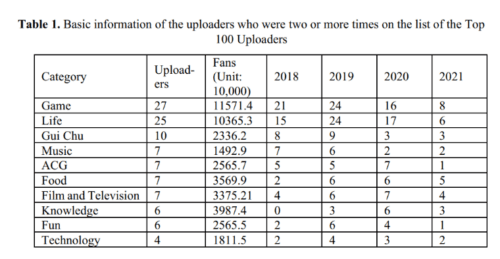
As the chart above shows, gaming remains the top category on Bilibili, but other content has grown in popularity. The paper above explains that, like YouTube, the app has also become a place for people to watch documentaries and learn from professionals.
Nevertheless, Bilibili has retained its image as a simple video streaming website for China’s youth subcultures. This is distinct from Rednote, which has a mainly upper-middle-class female audience, or Douyin, which caters to the general population.
Think of it like this: Rednote promotes clean-looking videos advertising how different products enhance a person’s life. Douyin, like TikTok, thrives on down-to-earth lo-fi videos (though not always as some creators spend a lot of money to make glossier videos). BiliBili is full of videos with a cyberpunk feel where creators carefully cut up cartoon and video game memes to strengthen the appeal of their content.
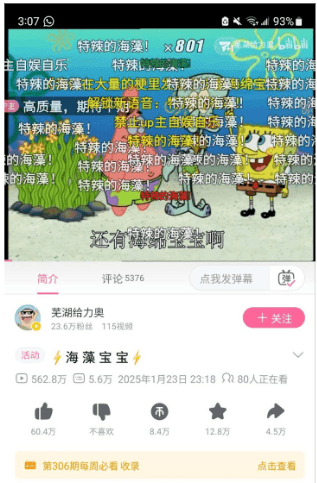
Bilibili’s cyberpunk aesthetic is most evident in its most memorable feature: Bullet comments, which appear across content and help users better communicate their feelings about what they are watching. Bullet comments may seem overwhelming or intense for a non-native audience as user comments fly across the video like sped-up subtitles competing in multi-lane traffic (see image below).
WeChat Channels

Main Audience: Everyone
Users: 900 million
Video Length: 1–3 minutes
Genres: All
International Version: Yes
WeChat is much more than just China’s number one social messaging app; users can use it to book hotels, buy train tickets, do banking, and more. One prominent feature is WeChat Channels which is like having TikTok within WhatsApp.

What makes WeChat Channels different from Douyin is that videos found here are attached to WeChat’s broader ecosystem, meaning users will see videos from their more intimate friends.
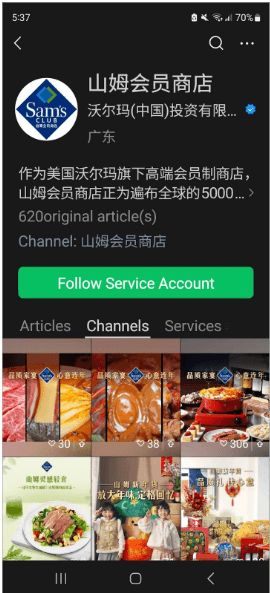
Unlike Douyin or Rednote, WeChat Channels is usually a subsection of a company account and not the main interface for brands on the app. For example, the Official Account for Sam’s Club shares both videos and articles.
Due to WeChat’s importance to communication in China, its audience is much broader and bigger than the other apps I’ve mentioned, which is something to consider when debating what apps to advertise on.
Kuaishou

Main Audience: Lower-tier cities
Users: 714 million
Video Length: Up to 10 minutes
Genres: All
International Version: Yes
Founded in 2011, China’s oldest short-form video app Kuaishou is last on today’s list, and less of a taking point of late, but despite this, they’ve been gaining users.
In its earlier days, Kuaishou was more popular outside China’s bigger and richer cities, and its video content on rural life in China appealed to a broad audience across the whole of the country. The app has even been celebrated for its ability to use these demographics to help impoverished individuals escape poverty.
In recent years, Kuaishou has adapted its strategy to appeal to new audiences, and some commentators believe the app is now relying heavily on well-known influencers and has lost its “common man” image.
This has been partially driven by the growth of Douyin—which has more of an international presence—and the need to compete for market share. Although it has been facing some revenue issues, it joined the Hong Kong stock market at the end of 2024. In the upcoming years, I’ll be keeping an eye on Kuaishou to see whether it can catch up with Douyin’s userbase.
That being said, some analysts believe China’s future growth potential resides outside of first-tier cities; therefore, there’s a chance that Kuaishou’s traditional appeal to “rural areas and people” may be advantageous in the future.
Contact Us
It’s important to remember that China’s video-streaming environment is more diverse than the West’s. Rednote has a noticeable upper-class female fanbase, and Kuaishou is more focused on rural parts of China, but people wouldn’t say YouTube caters for a certain class or region.
It’s a lot to take in, but don’t worry! Nanjing Marketing Group has more than 15 years of experience helping companies and individuals expand in the Chinese market. If this is something that interests you, feel free to contact us.